Field report SE-50 / M6 · sheet /strategy
Corporate StrategyFiled from the territory
Venus Aerospace's Detonation Engine Flies, and Lockheed Comes Calling
Venus Aerospace flew the first U.S. rotating detonation rocket engine in May 2025, claims 15% better efficiency than Saturn V, and landed Lockheed Martin.
- Grid
- SE-50 / M6
- Surveyed
- November 14, 2026
- Reading
- 4 min read
- Correspondent
- Sophie Lindqvist
Field notes
- May 2025: first successful U.S. flight of a rotating detonation rocket engine (RDRE) at Spaceport America, New Mexico.
- Venus Aerospace has raised nearly $140 million, including a $91 million Series B in June 2025, and employs 113 people.
- The company claims 15% more energy efficiency than the Saturn V and potential payload-doubling capability.
- Lockheed Martin signed a development deal with Venus to integrate RDRE tech into precision long-range missiles.
- Venus developed its rocket concept in roughly four years on $80 million, headquartered at the Houston Spaceport.
In May 2025, a silver rocket lifted off from Spaceport America near Las Cruces, New Mexico, and completed the first successful U.S. flight of a rotating detonation rocket engine (RDRE) — a technology that replaces a continuous burn with a choreographed ring of explosions. The company behind it, Texas-based Venus Aerospace, has since raised nearly $140 million and signed a development deal with Lockheed Martin.
The claim attached to that flight is large. Sarah Duggleby, who cofounded Venus with her husband, Andrew Duggleby, a rocket engineer, does not hedge the language.
"It's a step change in combustion physics," she said.
A step change, perhaps. But the burden of proof in propulsion is heavy, and Venus's numbers deserve as much scrutiny as its flight footage.
What does the technology actually change?
A rotating detonation rocket engine works differently from every mainstream rocket since the Apollo era. Conventional engines — from the Saturn V to SpaceX's Falcon — use deflagration (a continuous, controlled burn of fuel and oxidizer exposed to a flame). An RDRE instead sustains a precisely timed ring of subsonic explosions that detonate in a circular pattern inside an annular chamber, producing more thrust from less fuel.
The physics was theorized as far back as the 1980s. Researchers at Purdue University and the University of Central Florida finally demonstrated it, and Venus commercialized it. Sarah Duggleby says the distinction is even audible: she can tell a successful test flight by a specific whistling sound.
The efficiency figures are the heart of the pitch. Venus claims its rockets have achieved 15% more energy efficiency than the Saturn V, the rocket that carried astronauts to the moon in the 1960s and '70s. By comparison, Duggleby says, SpaceX's newest rockets are only 2% more efficient than their Saturn-era forebears. She also estimates Venus RDRE rockets can double the payload a rocket carries to space.
Those numbers are company figures, not independently audited benchmarks — the source offers no third-party verification, and no payload-doubling demonstration is described. The May flight was a test, not a commercial mission.
How the pivot to defense happened
Venus did not start out selling engines. "It turns out when you build the most efficient liquid rocket engine in the world, defense and space companies start coming to you like, 'Hey, could you sell us engines?'" Duggleby said. "We've pivoted, but at the core, it's always been about, if you want to go fast, you need a new engine."
The company now sits at the intersection of three accelerating spending streams: defense, commercial space, and aerospace technology broadly. This past summer, Venus struck a development deal with Lockheed Martin to integrate RDRE technology into precision long-range missiles — the concrete commercial win behind the pivot.
The funding follows the strategy. Venus has raised just shy of $140 million, including a $91 million Series B in June, and employs 113 people, per PitchBook.
Why Houston, and why it matters
The company's operating advantage is geographic. Venus headquartered at the Houston Spaceport for its concentration of aerospace talent and facilities, and can test-fire mounted rocket engines directly outside its hangar door at Ellington Field. Duggleby contrasted this with her Virgin Orbit experience in Southern California, where teams based in the South Bay or Long Beach drove hours to test in the Mojave Desert — time and cost that slowed development.
The proximity shows in the burn rate, at least as Duggleby tells it: Venus developed its new rocket concept in roughly four years on $80 million. Efficient iteration, however, is not the same as a proven, manufacturable product.
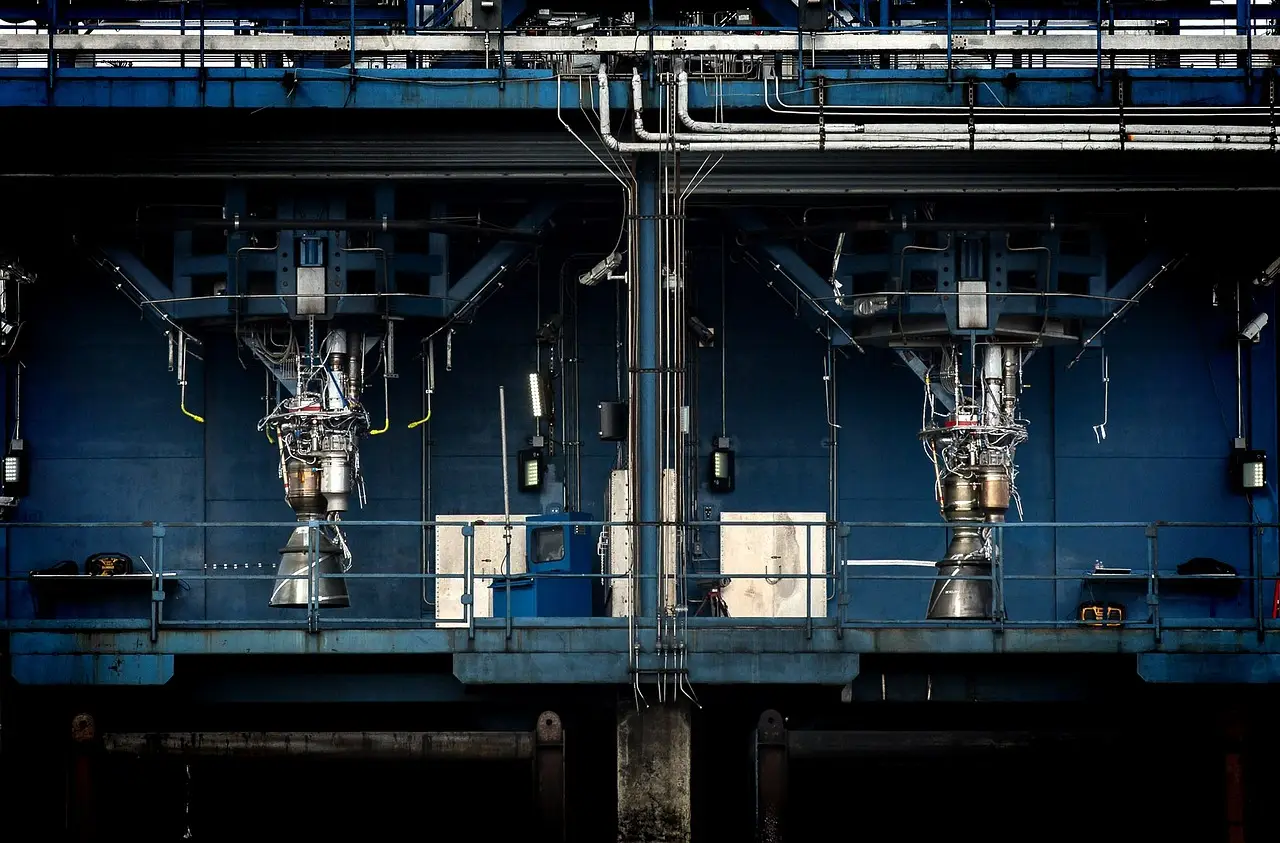
The engineering challenge was material as much as conceptual. Beyond the university blueprint, Venus ran extensive testing, materials science experiments, and high-speed camera analysis to make the engine commercially viable. The chamber holding rotating supersonic explosions required new kinds of materials and deft engineering.
Duggleby offered an analogy for the difficulty: "A rocket's like lighting a fire in a wax fireplace, and you have to keep the wax from melting."
What does this change for aerospace?
In the near term, defense. Venus is developing and testing rocket models across defense, space, and aerospace, while building a manufacturing process to produce them at scale. The plan is to work with numerous customers, embed Venus rockets inside their systems, and build a platform serving multiple industries.
"We have a current opportunity with what's going on geopolitically to get our engine into systems," Duggleby said. "But my hope and dream is that we will . . . not let go of that north star: that this is the engine that will ultimately unlock high-speed global travel."
That north star has a personal origin. In 2018, Andrew Duggleby was a Navy Reserve officer stationed in Japan with his family. Missing a grandmother's birthday, he joked that the 13-hour flight home could theoretically take one hour with the new engine technology being developed. They laughed — then founded Venus two years later, leaving jobs at Virgin Orbit in June 2020.
The irony is structural: a company founded on one-hour passenger travel is now scaling through missiles. Whether the defense revenue funds the hypersonic passenger dream, or quietly replaces it, is the question the next funding round will have to answer.
via fastcompany.com/rss (Source)
More from Sophie Lindqvist
Show full bio
Correspondent covering money, funding and market shifts around corporate strategy and chief-executive leadership at CEO Frontier.
278 articles
Adjacent sheets
- Toyota Puts $1M a Year Behind UChicago Quantum Mobility Alliance
- Boeing, RTX, GE Aerospace CEOs Take Certification Grievances to Transportation Secretary
- AI Firms Double Down on Fossil Fuel Deals, From Abu Dhabi to Texas
- Eclipse tests low-cost hydrogen from West Texas oil wells
- Rocket Lab Shares Fall 6.6% as $79.7 Million Loss Overshadows Revenue Beat