Field report SW-92 / P7 · sheet /leadership
CEO LeadershipFiled from the territory
Boeing, RTX, GE Aerospace CEOs Take Certification Grievances to Transportation Secretary
Boeing, RTX and GE Aerospace CEOs meet the transportation secretary in Savannah to press for fixes to what's broken in the FAA certification system.
- Grid
- SW-92 / P7
- Surveyed
- October 14, 2026
- Reading
- 3 min read
- Correspondent
- Priya Raman
Field notes
- CEOs of Boeing, RTX and GE Aerospace are meeting the U.S. transportation secretary in Savannah, Georgia
- The executives are to tell officials what is and isn't working in the FAA approval system
- The meeting elevates FAA certification from a working-level engineering issue to a CEO-level strategic concern
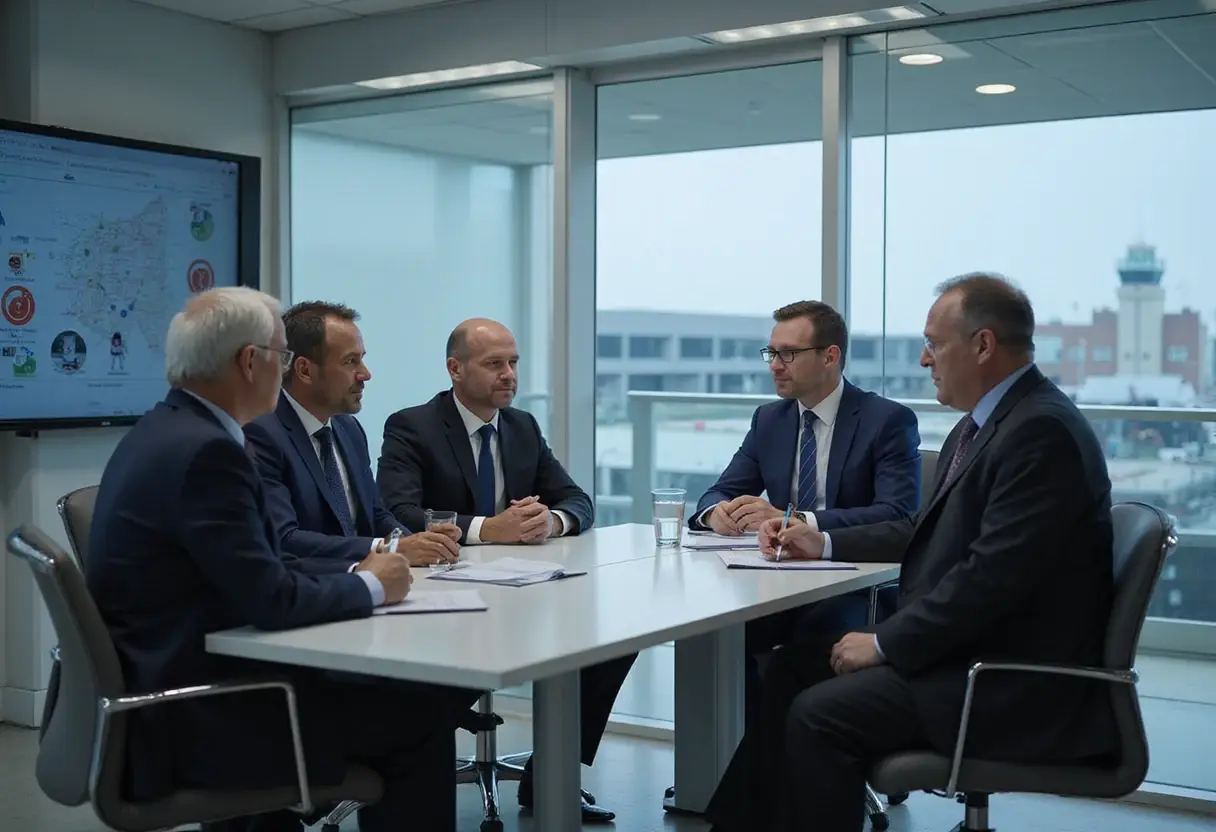
The CEOs of Boeing, RTX and GE Aerospace are sitting down with the U.S. transportation secretary in Savannah, Georgia, to talk about what is and isn't working in the FAA's aircraft certification system, according to the meeting agenda as reported.
That's the headline fact, and it matters for one reason: rank. These aren't regulatory-affairs vice presidents or trade-association lobbyists making the trip. When three chief executives whose companies anchor U.S. aerospace manufacturing show up in person, the message is that certification — the process by which the Federal Aviation Administration approves new aircraft and engines — has become a boardroom-level problem.
Who is in the room, and why Savannah?
The meeting brings together the top executives of Boeing, RTX (the parent of jet-engine maker Pratt & Whitney) and GE Aerospace with the transportation secretary, the cabinet official who oversees the FAA. The venue is Savannah, Georgia.
The executives' brief, as laid out in the source report, is straightforward: they are to tell officials what is and isn't working in the FAA approval system. That phrasing cuts both ways. Expect a catalogue of bottlenecks — and, implicitly, an acknowledgment of where the process still functions.
What is certification, exactly?
For readers outside the industry, a short primer. Certification is the regulatory gate a new aircraft, engine or major design change must pass before it can carry passengers or be delivered to customers. The FAA reviews test data, design documentation and manufacturing quality before signing off.
It is not a rubber stamp. It's the mechanism that keeps unsafe hardware off the runway. But it's also the mechanism that sets delivery schedules, revenue timing and, ultimately, cash flow for manufacturers. When certification slows, finished aircraft can sit undelivered, and suppliers wait for payment. The stakes are financial as much as safety-related.
Why does CEO-level involvement signal urgency?
Aerospace companies negotiate with the FAA constantly, but usually through dedicated certification teams embedded at program level. Escalation to the secretary's office — with CEOs personally present — suggests the industry feels those working-level channels have stopped producing results.
Three companies, one meeting. The convening of Boeing, RTX and GE Aerospace together is itself a datum. These firms compete hard for engine and airframe business, yet they share a common dependency: the pace of FAA approvals. A joint appearance amounts to a sector-wide statement that the approval pipeline, not any single product, is the concern.
What does the meeting change?
In the near term, nothing formally. A meeting in Savannah doesn't amend regulations or reassign FAA staff. What it can do is set priorities — directing the secretary's attention to specific choke points in the approval system that the executives identify.
The risk runs the other direction too. Any push for faster certification invites the obvious question: does speed compromise scrutiny? The FAA's approval process exists because aircraft failures carry catastrophic costs, a lesson the industry has absorbed painfully. Executives asking for a smoother system will have to make the case that they're seeking predictability, not laxity.
What happens next?
Watch for follow-through, not statements. The meaningful indicators would be:
- Staffing or process changes at the FAA aimed at certification throughput
- Public comment from the secretary's office framing the meeting's outcomes
- Delivery-schedule commentary from the three companies in their next earnings calls
Until one of those appears, the Savannah meeting stands as a signal rather than a decision — a high-rank, high-visibility signal that the certification system is now a strategic issue for America's largest aerospace manufacturers, and that their CEOs intend to manage it personally.
via Quartz (Source)
More from Priya Raman
Show full bio
Senior reporter covering technology and product news in corporate strategy and chief-executive leadership at CEO Frontier.
65 articles