Field report SE-46 / K2 · sheet /expansion
Expansion & MarketsFiled from the territory
South Africa Forecasts Record Canola Harvest as Plantings Surge
South Africa forecasts a record 368,270-tonne canola harvest, up 20% year on year, as plantings reach 197,890 hectares — eleven times the 1998-99 level — with exports already reaching Germany and Belgium.
- Grid
- SE-46 / K2
- Surveyed
- November 13, 2026
- Reading
- 3 min read
- Correspondent
- Elena Vasquez
Field notes
- South Africa expects a record canola harvest of 368,270 tonnes in 2026-27, up 20% year on year.
- Canola plantings have grown from 17,000 hectares in 1998-99 to an estimated 197,890 hectares in 2026-27.
- South Africa now produces about 3 million tonnes of soybeans a year after crushing investment between 2014 and 2020 turned it from net importer to net exporter.
- 2.5 million hectares of state land are being released with title deeds to boost commercial agricultural production.
- South Africa is a net canola exporter, shipping to Germany and Belgium in recent years.
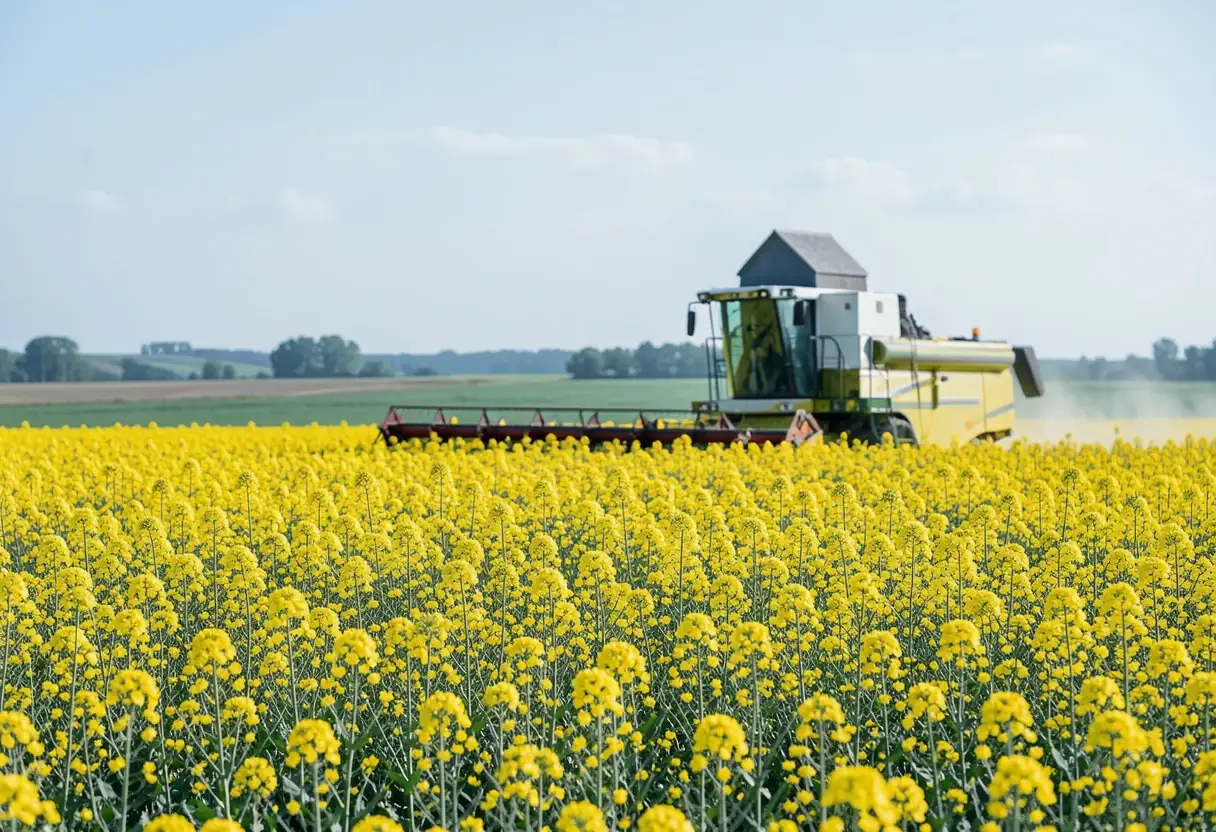
South Africa expects a record canola harvest of 368,270 tonnes in 2026-27, a 20% increase on the previous season, as plantings expand to 197,890 hectares — more than eleven times the 17,000 hectares farmers first sowed commercially in 1998-99.
The crop forecast, reported late in the season, comes despite uneven weather in the Western Cape, the winter-rainfall region where most of the country's canola grows. Analysts say the crop has performed reasonably well and the ample harvest will probably materialise.
Canola now ranks among South Africa's clearest agricultural success stories, alongside soybeans and the established fruit export industries in citrus, berries, grapes and nuts.
How did canola reach this scale?
The expansion mirrors the trajectory of the soybean industry. Rising domestic demand for vegetable oils and oilcake, used largely in animal feed, has pulled farmers into canola. Profitability has also redirected land: some growers in the Western Cape have switched from wheat to canola in recent years because the oilseed has paid better.
The area planted has grown at an extraordinary pace. Commercial canola cultivation began on 17,000 hectares in 1998-99; nearly three decades later the figure stands at an estimated 197,890 hectares for 2026-27 — an elevenfold increase that translates into roughly 6,300 additional hectares under the crop each year on average.
South Africa has crossed a commercial threshold as a result. The country is now a net exporter of canola, having shipped the crop to Germany and Belgium in recent years.
What does the soybean precedent show?
The soybean turnaround offers the model. Not long ago South Africa was a net importer of soybean oilcake for animal feed. Investment in crushing and processing plants between 2014 and 2020 sparked a surge in plantings, and the country now produces about 3 million tonnes of soybeans a year and exports the surplus.
The lesson is that processing capacity, not just farm-level ambition, drives value-chain growth. Canola's rise, achieved in a smaller oilseed segment, points the same way.
Where does the next expansion come from?
The remaining opportunity lies in land. Analysts argue the task is not only to lift output in established commodities but to extend commercial production into areas left outside South Africa's agricultural success story — the former homelands and new state land now being released with title deeds.
The land in question is substantial: 2.5 million hectares earmarked to boost commercial agricultural production. Details of the release are still being finalised, but collaboration with commodity associations and agribusinesses is viewed as essential to making the land productive.
The allocation is not limited to field crops and fruit. Livestock and poultry, both central to South Africa's agricultural progress, fall within the plan's scope.
Is a new policy plan needed?
No, according to the analysis. The land-release agenda aligns with the existing Agriculture and Agro-processing Master Plan, a framework that agricultural stakeholders and other social partners co-created and broadly support.
What is required now is consistent implementation. The Department of Agriculture, together with the Department of Land Reform and Rural Development, must lead both the release of land and the push for its productive use.
Can export markets keep pace with output?
Expansion in production must run alongside expansion in markets, the analysis argues. The strategy has two tracks:
- Retain existing export markets in Africa, Europe, the UK and the Americas.
- Pursue new demand in the Middle East and Asia, regions described as offering a range of attractive opportunities.
A deliberate export push, paired with land reform implementation, would replicate the canola success across other crops and spread prosperity beyond the country's established farming regions, the analysis concludes.
Canola's journey from 17,000 hectares to nearly 198,000 shows what is achievable; the 2.5 million hectares awaiting title deeds show what comes next.
via bizcommunity.com (Source)
More from Elena Vasquez
Show full bio
Staff writer covering companies, deals and strategy in corporate strategy and chief-executive leadership at CEO Frontier.
252 articles
Adjacent sheets
- War in Iran Drags South African Citrus Exports Down to 201 Million Cartons
- FMN's GAIL Targets 10,000 Hectares of Wheat Across 13 Nigerian States
- Africa Made It Targets $34bn GDP Shift From Raw Cotton to Garments
- S&P Global: West Africa's Power Problem Is Deliverability, Not Gas
- AngloGold Ashanti commits up to $900m to lift gold output