Field report NE-54 / N6 · sheet /expansion
Expansion & MarketsFiled from the territory
UK Lobbies Washington for Joint Build of Arrowhead 140 Frigate
UK minister Luke Pollard lobbies Washington to build an American version of Babcock's Arrowhead 140 frigate, against five rival foreign designs in Trump's contest.
- Grid
- NE-54 / N6
- Surveyed
- November 18, 2026
- Reading
- 4 min read
- Correspondent
- Amara Osei
Field notes
- Trump's August memo launched the search for a foreign frigate partner; the Navy retired its last frigate in 2015.
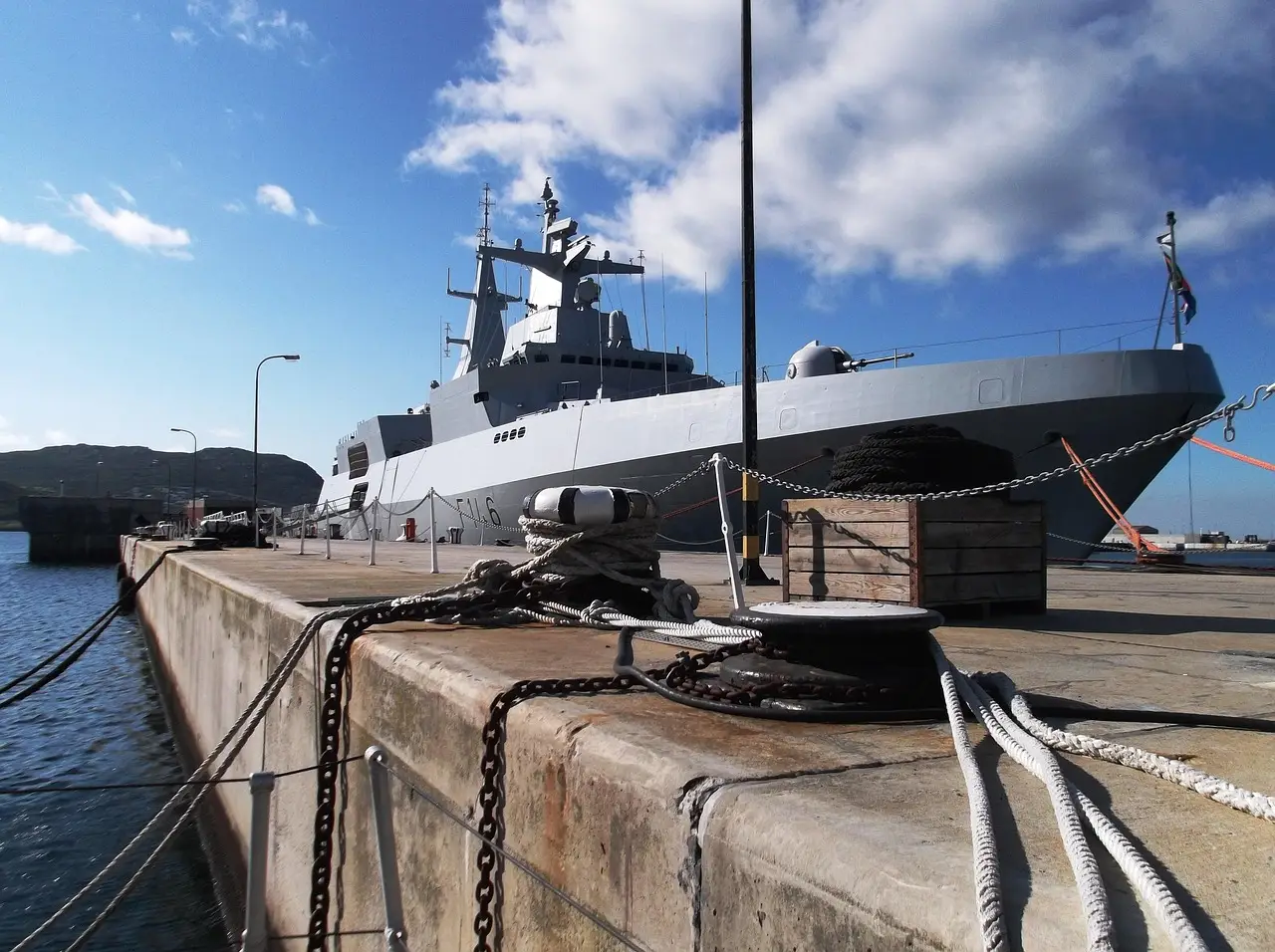
- Babcock's Arrowhead 140, roughly 6,000 tons and 140 meters long, competes against five foreign designs.
- Five Type 31 frigates are under construction in Scottish shipyards.
- Poland and Indonesia have already exported the design with local modifications.
- Congress remains resistant to turning abroad for the frigate program.
The United Kingdom has opened a formal lobbying campaign in Washington to secure a joint production contract for an American version of the Arrowhead 140 frigate, pitching the design as a product of the "Special Relationship" rather than a foreign import. Defense Readiness and Industry Minister Luke Pollard laid out the bid during a briefing at the U.K. embassy in Washington, D.C., according to a report on the minister's remarks.
The contest dates to August, when President Donald Trump issued a memo seeking a partnership with a foreign nation to design and build a new frigate for the U.S. Navy. The Navy has lacked a frigate since retiring its last 1970s-era Oliver Hazard Perry-class vessel in 2015. Frigates — warships a step below destroyers, less heavily armed but providing a vital support role for larger ships — have been absent from the fleet for a decade.
Why does the Navy want frigates now?
Recent naval conflicts against the Yemeni Houthis and Iran exposed the cost gap. Expensive destroyers routinely fired expensive interceptors to counter cheap threats such as drones. Smaller, cheaper frigates would suit that mission better, the report noted.
Who is competing for the contract?
The U.K. entry comes from British defense contractor Babcock, whose Arrowhead 140 design spawned the Royal Navy's Type 31 class. Five main rivals are in the field:
- Spain's Navantia with the F-110 design
- Italy's Fincantieri with the FREMM EVO design
- Turkey's Istanbul design
- South Korea's Chungnam design
- Japan's Mitsubishi with the Mogami design
What is the U.K. pitch?
Pollard framed the Arrowhead 140 as a natural pick for an ally. "We don't view this as a foreign frigate. We view this as a friendly frigate from a friend, because the U.S. and the U.K. naval relationship is so deep that we build each other's gear already," he said. He described the pitch as "working with a friend to have an American-built ship in America."
The minister stressed that London wants to transfer shipbuilding expertise to American yards rather than shift construction abroad. "I'm not here saying, 'Hey, British shipyards are great; you should build our stuff there.' We're deliberately saying our shipbuilders are great, but actually, the advanced manufacturing techniques that we use in Britain, we want to be able to support our American friends to increase the productivity and efficiency of U.S. shipbuilding," Pollard said.
He pointed to results already in hand: five Type 31 frigates are under construction in Scottish shipyards, built, in his words, "with a greater speed and productivity than some shipyards already." Babcock is eyeing a partnership with a U.S. shipyard that has yet to be announced.
What would the American version carry?
The roughly 6,000-ton Arrowhead 140 sits on the heavier end of the frigate spectrum, just below a destroyer, with a design aimed at survivability and blue-water roles rather than coastal defense. The design adapts to each buyer, and the U.S. version would carry:
- Mk 41 Vertical Launching System launchers
- A U.S. radar system and U.S. command-and-control systems
- Room for a Seahawk helicopter
- Additional space for drones and other autonomous systems
Pollard joked that the 140 designation, which refers to the ship's 140-meter length, would need converting to American units — becoming the Arrowhead 153 for 153 yards.
Does the design have a track record?
Poland and Indonesia have already bought the Arrowhead 140 and are building the vessel with their own modifications. In British service, the Type 31 is set to anchor a larger strategy. Pollard said the Royal Navy sees the class as "mother ships for the hybrid navy" — the service's plan to reclaim significant-naval-power status by blending crewed and autonomous systems.
"We are deliberately designing this class of vessel in the United Kingdom to be the center of our hybrid navy, which is our crewed, uncrewed, and autonomous navy, all operating together," he said.
What stands in the way?
The U.S., with its industrial capacity and massive navy, will continue relying on crewed vessels regardless. The immediate obstacle is Congress, which the report described as less-than-enthusiastic about turning abroad to solve America's frigate problems. Any Trump administration decision in favor of the Arrowhead 140 would still need to overcome that resistance before a hypothetical U.S. frigate class could emerge.
via washingtonexaminer.com (Source)
More from Amara Osei
Show full bio
Market editor covering people, launches and day-to-day practice in corporate strategy and chief-executive leadership at CEO Frontier.
452 articles
Adjacent sheets
- China Leads U.S. in Hypersonic Weapons, $13 Billion Startup CFO Warns
- Army Opens Manufacturing Rodeo: $3,000 Drone Cap, 400-Aircraft First Run
- Hegseth's $1.5 Trillion Pentagon Request Faces Democratic Rejection
- Stellantis sells Brampton assembly plant to defence firm Roshel
- Thune Weighs Pre-Thanksgiving Push to Advance $350 Billion Pentagon Funding