Field report NW-92 / J4 · sheet /macro
Boardroom MacroFiled from the territory
UK Grew 0.7% in Q3 2026 — But Shadow Chancellor Says Labour Cannot Claim Credit
Shadow chancellor Andrew Griffith says Q3's 0.7% GDP growth reflects resilient business, not government policy, as construction shrinks and public spending surges.
- Grid
- NW-92 / J4
- Surveyed
- November 13, 2026
- Reading
- 3 min read
- Correspondent
- Amara Osei
Field notes
- UK GDP grew 0.7% in Q3 2026, up from 0.5% in Q2, and 1.9% year on year.
- Bank of England estimates AI-related activity accounts for a fifth of all UK growth since the start of the year.
- Construction shrank 0.7% in Q3; OBR expects 190,000 fewer new builds than forecast in March.
- Public sector spending and investment grew 20% since 2019 versus 3.2% in the private sector.
The UK economy expanded 0.7 per cent in the third quarter of 2026, yet shadow chancellor Andrew Griffith argues the growth belongs to British business, not to the government. In an op-ed published by City A.M., Griffith wrote that ministers should not take "a celebratory lap from a decidedly mixed picture".
The numbers frame his case. GDP rose 0.7 per cent in Q3 2026, up from 0.5 per cent in the second quarter, and stands 1.9 per cent higher than a year earlier. Griffith, who entered politics after a business career, called the figures welcome but no boom — and squarely in line with expectations given global shocks and rising inflation.
Where did the growth actually come from?
Office for National Statistics (ONS) data, the UK's official economic statistics body, identifies technology and business services — including IT and computer equipment — as the principal growth drivers. Griffith credited the global artificial intelligence boom, arguing that Britain's services sector is well positioned to capture it because the country's position outside the European Union has shielded it from what he termed "overzealous AI regulation".
One statistic anchors the argument. The Bank of England estimated last week that AI-related activity accounts for a fifth of all UK growth since the start of the year. Griffith warned that any EU reset which imports Brussels regulations could therefore prove "enormously damaging".
What went wrong beneath the headline?
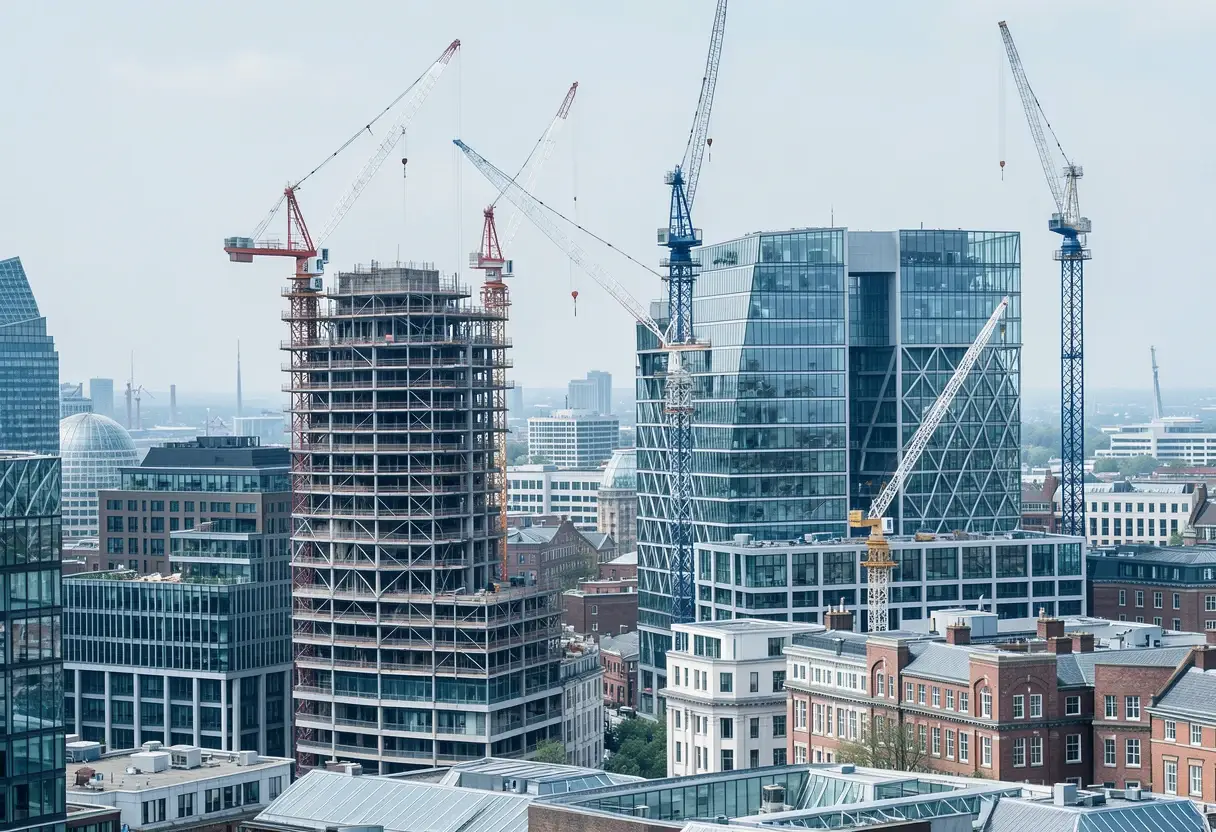
The construction sector, a resolutely domestic industry, shrank 0.7 per cent in Q3 under a government that promised to get Britain building. Griffith noted that construction sector indices have remained in negative territory since Labour took office.
The Office for Budget Responsibility (OBR), the government's independent fiscal watchdog, now expects 190,000 fewer new builds than it forecast as recently as March. Construction, Griffith wrote, is a large sector sitting at the sharp end of government policy — and "the verdict isn't good".
The public-private split deepens the concern. Public sector spending and investment have grown 20 per cent since 2019, while the equivalent private sector components have grown only 3.2 per cent. Griffith described the imbalance as worsening rather than new, comparing it to "a hungry snake eating its own tail".
Why is this no moment for a victory lap?
Households face a squeeze in the months ahead, Griffith wrote, citing expensive energy bills, inflation that remains high and rising interest rates. The families and businesses that have kept the economy moving, he argued, are about to be squeezed further.
His prescription lists three measures:
- Cut energy costs by resuming domestic drilling and removing the levies and obligations that have held back industry and raised household bills.
- Lift the burden on employers from Labour's Employment Act — which Griffith branded a "back to the 1970s" law — and adopt the Conservative policy of halving the jobs tax, employer national insurance contributions, for young people.
- Speed up planning and cut what he called gold-plated regulations to revive construction.
Is Britain growing despite the government?
Griffith's closing verdict is blunt. This week's growth figures, he wrote, remain a testament to the strength and resilience of British businesses — and such growth as exists has come "despite, not because of, the government".
"Just imagine what those businesses could do with a government properly on their side," the shadow chancellor concluded.
The piece arrives as ministers point to the Q3 figures as evidence of economic momentum. Griffith's counter-narrative rests on the composition of that growth: a services and AI-led expansion, offset by a contracting construction sector and a widening gap between state-led and private-sector activity.
via cityam.com (Source)
More from Amara Osei
Show full bio
Market editor covering people, launches and day-to-day practice in corporate strategy and chief-executive leadership at CEO Frontier.
272 articles
Adjacent sheets
- UK GDP Grew 0.7% in Q3 as AI Investment Lifts Business Activity
- AI Accounts for a Fifth of UK Growth — and Slough Is the Engine
- Consultancy and AI Demand Drove UK GDP Growth in Third Quarter
- AI Capex Nears $700 Billion, and the Cash Burn Worries Investors
- Data Centers Need Community Stakes and Regulatory Accountability