Field report SE-52 / Q7 · sheet /strategy
Corporate StrategyFiled from the territory
SpaceX catches Starship upper stage returning from orbit — a first
SpaceX caught Starship's upper stage with tower arms after 22.5 hours in orbit and 26 Starlink V3 satellites deployed — but the Super Heavy booster blew up over the Gulf on the same flight.
- Grid
- SE-52 / Q7
- Surveyed
- November 20, 2026
- Reading
- 3 min read
- Correspondent
- Sophie Lindqvist
Field notes
- SpaceX caught the Starship upper stage at Starbase, Texas, 22.5 hours after Friday liftoff — its first orbital-stage catch.
- The flight deployed 26 Starlink V3 satellites, all of which made contact and are raising orbits.
- The Super Heavy booster's boostback burn ended early on low fuel mass; it exploded over the Gulf of Mexico after a landing burn.
- Starship is one of two NASA Artemis lunar lander designs; SpaceX targets full capability around end of 2027.
By Sophie Lindqvist
SpaceX caught the upper stage of its Starship rocket with launch tower arms on Saturday, the first time the company has recovered the orbital spacecraft after a flight — and the same mission lost the Super Heavy booster to an explosion over the Gulf of Mexico.
The catch is the decision-grade fact: full and rapid reusability is the economic premise of Starship, and until Saturday no upper stage had ever come back from orbit to its launch site. The booster, which SpaceX has caught before, failed this time. Both halves of the system must work for the cost model to hold.
What happened on Flight 15?
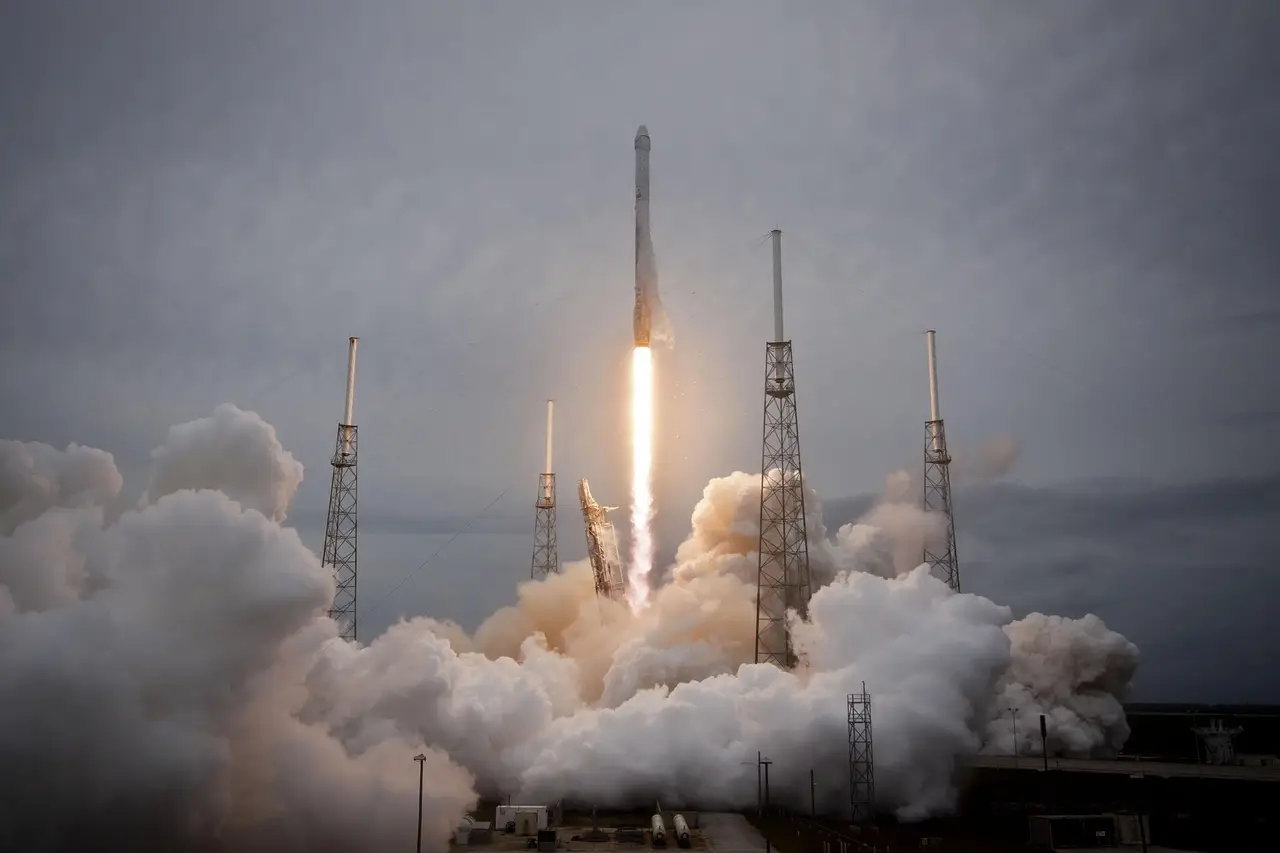
Starship lifted off from Starbase, Texas, on Friday on its 15th flight. It deployed 26 Starlink V3 satellites in orbit, and SpaceX confirmed contact with every satellite; all are now raising their orbits to join the Starlink constellation (the process of circularizing a satellite's path at operational altitude).
The vehicle returned to the same Texas site 22.5 hours after liftoff. Flight controllers monitored it in space for more than 20 hours before preparing the return. Starship relit a single Raptor sea-level engine for a deorbit burn (the maneuver that drops a spacecraft out of orbit), navigated to the Texas coast and flew a final swoosh maneuver over the Gulf before approaching the tower. Before that burn, the spacecraft was travelling faster than 17,000 mph at 170 miles above Earth, according to The New York Times.
Three Raptor engines ignited for the landing flip and slow descent into the tower arms, which closed around the vehicle.
What went wrong with the booster?
The Super Heavy booster relit 32 of a planned 33 Raptor engines for its boostback burn, which ended early because of low fuel mass. SpaceX said it is investigating the root cause. The booster's guidance system then triggered an automated abort, diverting it to an offshore landing location where it completed a landing burn over the Gulf. When that burn ended, the flight termination system (an explosive device required on all rockets) triggered, and the booster blew up just short of the water's surface, according to CNBC.
SpaceX did not catch the booster — a half-success that the company's celebratory framing does not emphasize. A booster destroyed on every second flight still caps the reusability economics.
What was said, and by whom?
NASA Administrator Jared Isaacman congratulated SpaceX on X, The New York Times reported. SpaceX Chief Executive Elon Musk shared footage on X of Starship seen from underneath, taken while engineers examined the vehicle after landing.
Musk had set expectations on the company's third-quarter earnings call last month: "I'd say it's more likely than not that this succeeds next flight." It did succeed — for the upper stage, at least. Musk's timelines warrant scrutiny: SpaceX is aiming for Starship to reach full capability around the end of 2027, a target that has moved before.
The stakes for NASA are concrete. Under the Artemis program, Starship is one of two lander designs chosen to carry astronauts down to the Moon's surface. A lunar lander that cannot yet reliably recover either of its stages is a schedule risk the agency cannot ignore.
What does this change for launch economics?
For a decade, SpaceX has flown Falcon 9 boosters back to the ground and relaunched them, while expending those rockets' second stages on every mission, as The New York Times noted. Starship was designed to close that gap: recover both stages, refly both, cut cost per kilogram to orbit sharply.
Saturday proved the harder half — the orbital upper stage — can return and be caught. It did not prove the system can do it twice in a row, or recover the booster on the same flight. Flight 15 was planned as the first attempt to catch both stages together; only one came home intact.
The next flight will answer whether the catch was a repeatable procedure or a first-try anomaly. Until then, the 2027 full-capability date remains a promise, not a plan.
via qz.com (Source)
More from Sophie Lindqvist
Show full bio
Correspondent covering money, funding and market shifts around corporate strategy and chief-executive leadership at CEO Frontier.
515 articles
Adjacent sheets
- SpaceX Will Try to Catch Both Starship Stages for the First Time
- SpaceX Catches Starship Back From Orbit, Rewriting Reusability Math
- SpaceX Catches Starship Back From Orbit in Historic First
- SpaceX's First Starship Ship Catch: Why Flight 15 Is a 40 Percent Gamble
- SpaceX Catches Starship Midair After First Orbital Return, 22 Hours After Launch