Field report SE-10 / N9 · sheet /expansion
Expansion & MarketsFiled from the territory
Nigeria commissions five Lagos CNG stations, targets 1,000
Five Lagos CNG stations add 24,000 standard-cubic-metre daily compression capacity each, but the government disclosed no pump prices, project costs or timetable for 500 more sites.
- Grid
- SE-10 / N9
- Surveyed
- November 11, 2026
- Reading
- 3 min read
- Correspondent
- Sophie Lindqvist
Field notes
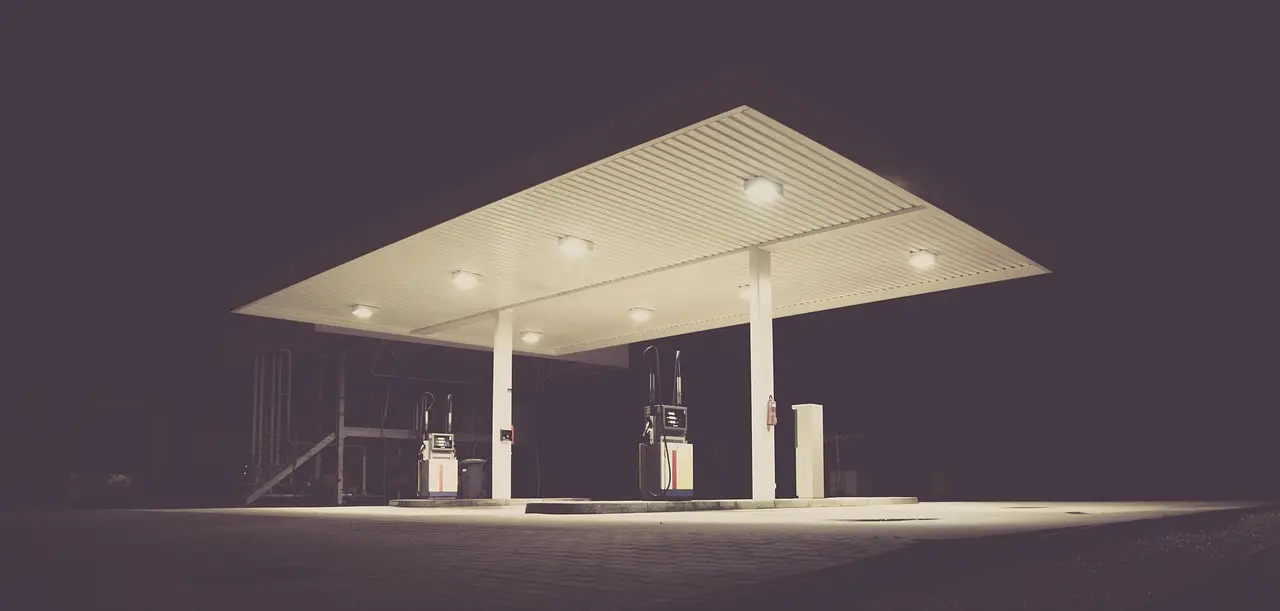
- Five CNG stations were commissioned across Lagos on Wednesday.
- Each station has 24,000 standard cubic metres per day of compression capacity and 9,800 of storage.
- The five sites are in Idimu, Abule Egba, Ogolonto, Ajah and Oko-Oba across four local-government areas.
- Tinubu directed 500 additional refuelling stations toward a planned national network of 1,000.
By Sophie Lindqvist
Nigeria’s federal government commissioned five compressed natural gas (CNG) daughter and last-mile retail stations in Lagos on Wednesday. The decision adds fuel capacity while leaving key commercial questions unanswered.
Each facility has compression capacity of 24,000 standard cubic metres per day and storage capacity of 9,800 standard cubic metres. The stations are located in Idimu and Abule Egba in Alimosho Local Government Area; Ogolonto in Ikorodu West; Ajah in Eti-Osa; and Oko-Oba in Agege.
Minister of State for Petroleum Resources (Gas) Ekperikpe Ekpo commissioned the sites. Ibile Oil and Gas Corporation (IOGC) developed them with support from the Midstream and Downstream Gas Infrastructure Fund (MDGIF). The announcement did not state the amount or terms of MDGIF support.
Ekpo said: “These stations represent access. They represent affordability. And they represent the determination of government to take the benefits of Nigeria’s gas resources directly to the people.”
The outlets are designed as last-mile facilities, meaning they bring fuel closer to users in residential and business locations. He said the sites would improve fuel access for motorists and commercial transport operators while supporting cleaner energy infrastructure nationwide. His broader case links domestic gas to industrial growth, business activity, transportation, job creation and lower household cost pressure.
Ekpo said Lagos had demonstrated the value of long-term planning, institution building, infrastructure development and private-capital mobilisation for economic growth during President Bola Ahmed Tinubu’s tenure as governor. The federal government, he said, was applying that approach nationally through the Renewed Hope Agenda.
Under that agenda, he said, Nigeria’s abundant gas resources must power industries, support businesses, improve transportation, create employment and ultimately reduce cost pressures on ordinary citizens. The speech links fuel availability to wider economic policy, but it did not quantify how CNG would affect those outcomes.
Beyond Lagos, Tinubu directed expansion of CNG infrastructure nationwide, including development of an additional 500 refuelling stations toward a planned national network of 1,000. The announcement provides no completion schedule or allocation of future sites to Lagos. It also does not state how the five openings count toward the national target.
What does this change for Lagos motorists and commercial operators?
The immediate change is the addition of five commissioned facilities across the named local-government areas, expanding the physical network available to residents and businesses. The government expects that access to alternative fuel will reduce operating costs for transporters and commercial operators while advancing cleaner-energy infrastructure.
The claimed saving remains unquantified. The announcement gives no pump price, comparison with other fuels, expected station utilisation, operating hours or estimate of savings passed to commuters. It also omits each project’s capital cost, MDGIF’s financial contribution and the revenue or pricing model for operators. Those omissions matter because commissioning confirms assets, not customer economics.
Ekpo set a more demanding test. “Our objective is therefore not simply to count the number of stations commissioned. Success must ultimately be measured by impact: whether the infrastructure helps reduce operating costs for transporters and businesses, whether those savings reach commuters, and whether Nigerian families begin to feel tangible relief,” he said.
Execution relies on a coalition: the Ministry of Petroleum Resources (Gas), the Presidential CNG Initiative, MDGIF, state governments, investors and other industry stakeholders. Ekpo commended IOGC and the Lagos State Government for supporting the initiative, which he presented as cooperation between federal and state governments and the private sector.
He also praised MDGIF’s catalytic role and assured investors that the government would maintain an enabling investment environment so commitments become physical projects and economic benefits for Nigerians. The strategic logic is straightforward: place more CNG close to transport users, combine public infrastructure support with private participation and test whether operating savings reach passengers.
Credibility will require equally practical evidence: published prices, transparent investment data, a deployment timetable and proof of lower costs. For motorists, operators and commuters, the five stations are a commissioning test rather than a finished affordability case. They increase access and establish measurable capacity, but the announcement has not yet shown that cheaper transport follows.
via leadership.ng (Source)
More from Sophie Lindqvist
Show full bio
Correspondent covering money, funding and market shifts around corporate strategy and chief-executive leadership at CEO Frontier.
229 articles
Adjacent sheets
- Nigeria Commissions Three CNG Facilities in Kano Targeting 2,500 Vehicles Daily
- Nigeria Commissions Three CNG Stations in Kano to Cut Fuel Costs
- S&P Global: West Africa's Power Problem Is Deliverability, Not Gas
- Nigeria's DisCos Accuse NNPC of 'Half-Truths' as Outages Spark Calls for Minister's Exit
- Nigeria Seeks UAE Backing for $25-26bn Gas Pipeline