Field report NE-12 / L9 · sheet /macro
Boardroom MacroFiled from the territory
Trump, Putin and Xi Meet in Shenzhen on November 19
Trump, Putin and Xi meet in Shenzhen on November 19 in an unprecedented trilateral of nuclear powers, evoking Yalta 1945 and raising fears in Europe, Ukraine and Taiwan of deals made without them.
- Grid
- NE-12 / L9
- Surveyed
- November 19, 2026
- Reading
- 4 min read
- Correspondent
- Olivia Hart
Field notes
- Trump, Putin and Xi meet in Shenzhen on Thursday, November 19, on the Apec sidelines
- The trilateral of three nuclear powers evokes the Yalta conference of February 1945
- Trump, 80, attends as a 'lame duck' after Republican losses in the November midterms
- Nvidia CEO Jensen Huang resigned days before the summit over an alleged Chinese agent link
- China prefers bilateral nuclear talks with the US over a trilateral format including Russia
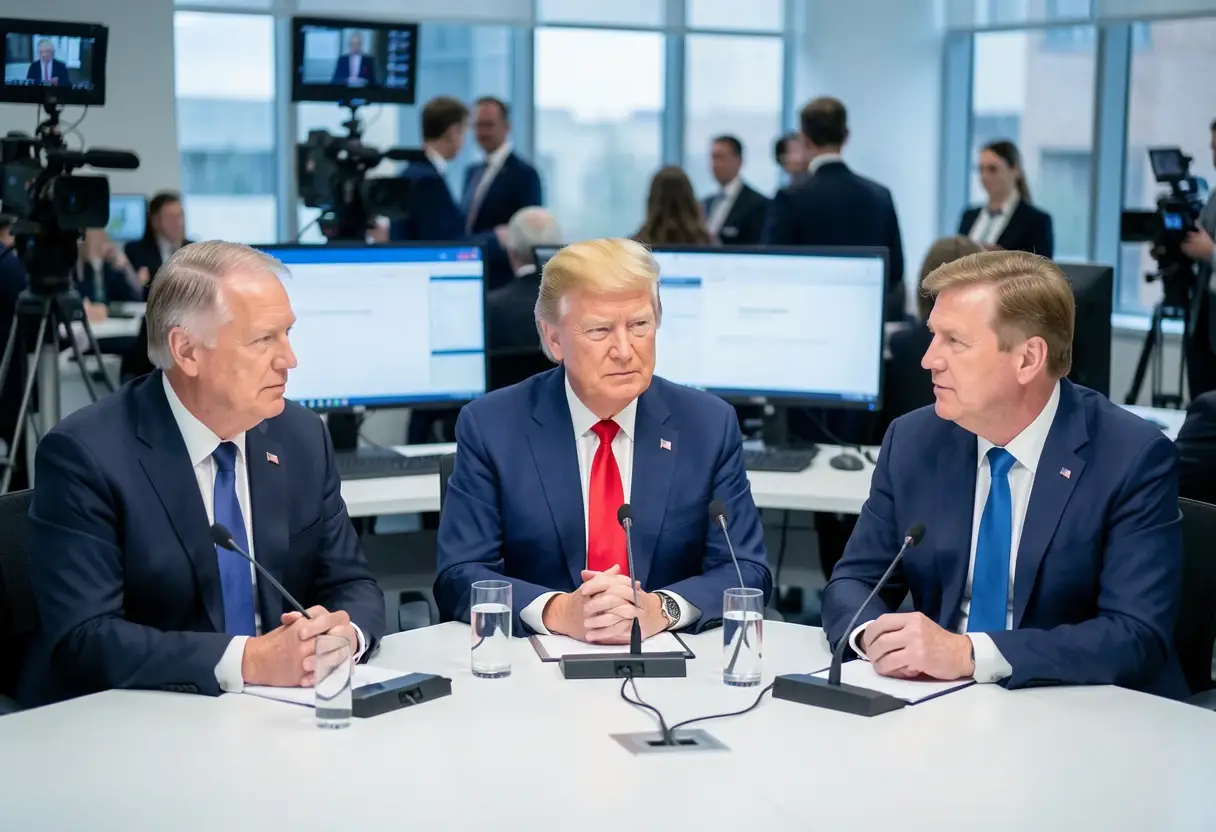
Donald Trump, Vladimir Putin and Xi Jinping will sit at the same table in Shenzhen, China, on Thursday, November 19, on the sidelines of the Apec summit. It is an unprecedented trilateral meeting of the leaders of three nuclear powers, and Russian media have already described it as historic.
The encounter evokes the Yalta conference of February 1945, when Franklin D. Roosevelt, Winston Churchill and Joseph Stalin redrew the structure of Europe months after the end of the Second World War. The parallel fuels fears in Europe, Ukraine and Taiwan that agreements could be reached without them at the table.
What can practitioners expect from the summit?
Analysts consider decisive breakthroughs unlikely on the war in Ukraine, nuclear disarmament or artificial intelligence. The diplomatic fact itself carries the weight: the presidents of the United States, Russia and China gathering around one table for the first time.
Each leader arrives with a separate agenda.
Putin treats the summit as a diplomatic success and a platform to restate Moscow's conditions for ending the war in Ukraine. On paper he is the weaker partner, leading a country with a population and economy far smaller than those of the United States and China. Yet despite Beijing's attempts to keep the issue off the agenda, the war triggered by the Russian invasion will dominate discussion — with neither Ukraine nor its main European allies present.
Fredrik Wesslau, senior researcher at the European Council on Foreign Relations, said: "He wants it to be Russia, the United States and China deciding the geopolitical fate of everyone else. But, ultimately, it is impossible to define the pillars of European security without the Europeans."
The imagery matters as much as the substance for the Kremlin. Russian state media will relay the picture of three presidents meeting in Shenzhen widely. Putin has claimed great-power status for Moscow continuously since the collapse of the Soviet Union.
What does the meeting change for Trump?
The White House framed the trilateral as an opportunity to advance nuclear arms control and discuss solutions to the wars in Iran and Ukraine. Trump, 80, also needs a foreign-policy stage: he faces his final two years as a "lame duck" after the Republican Party's heavy defeat in the mid-term elections in early November.
"Usually, after a negative outcome in midterm elections, this is how presidents try to start again, reminding other leaders that they maintain control over foreign policy," said Edgard Kagansen, senior consultant at the Center for Strategic and International Studies.
Opponents accuse Trump of no tangible results in the costly war against Iran, though the president insists the Islamic Republic "is in a very favorable situation for us." He scored one early diplomatic success: Xi Jinping will greet him personally on arrival in Shenzhen, an unusual gesture from the Chinese president.
An American opening on technology looks distant. Analysts expect Trump will not propose easing export restrictions on artificial intelligence technologies to China. The summit also lands days after the resignation of Nvidia CEO Jensen Huang, implicated in an affair linking him to an alleged Chinese agent.
How does Xi position China?
Xi hosts the trilateral to consolidate China's role in international diplomacy and to reaffirm Beijing's position on Taiwan. He aims to present his country as a power on the same level as the United States while keeping expectations modest.
On Ukraine, Beijing declares itself officially neutral and rejects accusations that it supports Moscow, including through exports of dual-use civil and military technologies. "Xi does not want Russia to lose, as this would represent an overall victory for the West," Wesslau noted.
Foreign Ministry spokeswoman Mao Ning called the summit an event of "historic significance," during which the leaders will hold an "in-depth exchange of views on safeguarding world peace and maintaining strategic stability in relations between the great powers."
Where do the three agendas collide?
Nuclear disarmament, a priority dossier for Washington, exposes the divides. Tong Zhao, senior researcher at the Carnegie Endowment for International Peace, said China prefers to handle the issue through bilateral talks with the United States rather than a trilateral negotiation that includes Russia.
Xi has also signalled the broader framing: unshakable relations with Moscow. For businesses and policymakers tracking export controls, sanctions regimes and Taiwan risk, the Shenzhen table — not the Apec plenary — is where the signals will come from on November 19.
via observatorial.com (Source)
More from Olivia Hart
Show full bio
News editor covering regulation, policy and their impact on corporate strategy and chief-executive leadership at CEO Frontier.
443 articles
Adjacent sheets
- Trump Heads to Asia for Xi Summit as Nvidia Scandal Lingers
- Trump Meets Xi and Putin in Shenzhen as Jan. 10 Trade Truce Nears
- Nvidia Spy Affair Looms Over Trump-Xi Summit as Bipartisan Hearings Gain Traction
- Kyiv, Moscow and Washington Meet in Abu Dhabi for First Talks in Nine Months
- Trump wants Jensen Huang back despite Nvidia’s no-reinstatement stance