Field report SE-94 / J7 · sheet /operations
Operations & RestructuringFiled from the territory
Royal Navy Deploys Carrier Drones to Take Over Helicopter Missions
Malloy quadcopters carrying up to 150 pounds now handle helicopter logistics and surveillance missions aboard HMS Prince of Wales, as Britain builds toward a hybrid drone-fighter air wing.
- Grid
- SE-94 / J7
- Surveyed
- November 17, 2026
- Reading
- 3 min read
- Correspondent
- Elena Vasquez
Field notes
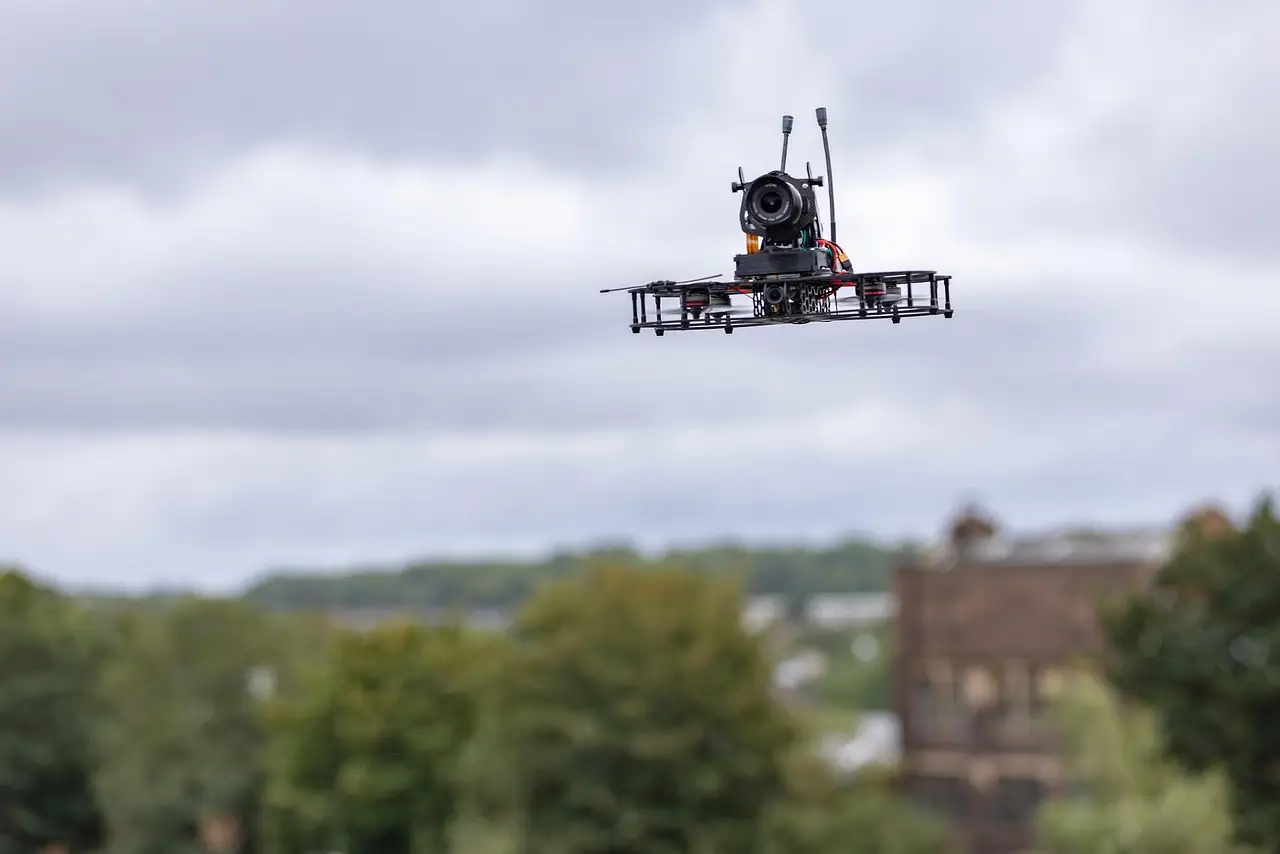
- Malloy quadcopter drones carrying up to 150 pounds now perform helicopter logistics and surveillance missions aboard HMS Prince of Wales.
- The first carrier drone delivery, by a Malloy T-150 with a roughly 23-mile maximum range, took place in 2025.
- The UK is investing hundreds of millions of dollars in jet-powered drones for a 'hybrid carrier air wing'.
- The Pentagon awarded Boeing a $562 million contract in September for the MQ-25A Stingray carrier-based refueling drone.
Quadcopter drones capable of lifting 150 pounds are now flying logistics and surveillance missions from the deck of HMS Prince of Wales, the UK's newest aircraft carrier, in tasks once reserved exclusively for helicopters.
A flight deck officer aboard the 65,000-ton, $4 billion warship said the unmanned aircraft, built by British firm Malloy Aeronautics, can substitute for helicopters in supply runs and intelligence, surveillance and reconnaissance. Speaking on condition of anonymity during a visit to the carrier last week off the coast of Norway, the officer said drone use "will only become more prominent over time" — though the unmanned systems will not fully replace crewed aircraft for these missions.
How the drones operate from the carrier
The Prince of Wales fields what the Royal Navy calls a "state-of-the-art" air wing: F-35B stealth fighters, Merlin and Wildcat helicopters, and the quadcopter drones. The Malloy aircraft launch from a section of the flight deck nicknamed the "graveyard," positioned next to the ski-jump ramp where fighter jets take off.
The carrier entered service in 2019, but the first carrier-based drone delivery came only in 2025, when a Malloy T-150 quadcopter carried supplies from the ship to a nearby warship. That trial flight covered just over a mile; the T-150's maximum range is roughly 23 miles, according to Malloy. The Royal Navy described the goal at the time as finding a "cheap and efficient alternative" to helicopter and boat deliveries.
What do the helicopters still do?
Crewed aviation retains the heavy missions. The Merlin Mk4 Commando moves troops from ship to shore and transports heavy cargo, while the Merlin Mk2 and the Wildcat provide anti-submarine warfare capabilities.
The push extends across Britain's two Queen Elizabeth-class carriers as part of a wider drive to make the military — at sea, on land and in the air — more autonomous. On Thursday, the Royal Navy announced that a strike drone launched last month from the flight deck of HMS Queen Elizabeth in the North Atlantic, the first such trial aboard a UK aircraft carrier. The mid-October trial also saw an AR-5 fixed-wing drone, made by Portuguese-British defense company Tekever for surveillance and logistics, operate from a carrier for the first time.
The tests mark progress toward a "hybrid carrier air wing," a concept in which the UK is investing hundreds of millions of dollars to develop jet-powered drones that would fly alongside F-35s. The Prince of Wales has already tested similar uncrewed systems from its deck, and trials could extend further across the class.
Where the global race stands
Other navies are moving in the same direction. NATO ally Turkey, along with China and Iran, has converted vessels into drone carriers. South Korea has tested uncrewed aircraft launches from an amphibious assault ship. The US Navy has experimented with drones for naval logistics and support missions.
The US Defense Department moved to scale its own program in September, awarding Boeing a $562 million production contract for the MQ-25A Stingray, a drone designed to refuel Navy fighter jets in flight. The Pentagon calls the Stingray "the world's first fully integrated, carrier-based" uncrewed aircraft.
Britain is also pressing autonomy below the air wing. The Royal Navy recently launched its first squadron formed entirely of autonomous surface vessels, designed to operate alongside traditional warships as NATO fleets absorb lessons from drone attacks that battered Russia's Black Sea Fleet.
The direction is fixed: the carrier air wing of the near future will be part machine.
via feeds.businessinsider.com (Source)
More from Elena Vasquez
Show full bio
Staff writer covering companies, deals and strategy in corporate strategy and chief-executive leadership at CEO Frontier.
489 articles
Adjacent sheets
- Ukraine's $40,000 Drone Boats Take Out $400 Million Air Defenses
- Amazon Prime Air Wins World-First SAIL 4 Approval in the UK
- Army Opens Manufacturing Rodeo: $3,000 Drone Cap, 400-Aircraft First Run
- FAA Clears First Gulf Drone Mission Beyond Visual Range
- Hawaiian Electric Deploys Cyberhawk Drones to Find Grid Faults Before Wildfires Start