Field report S-77 / J8 · sheet /operations
Operations & RestructuringFiled from the territory
Over 10,000 Flights Hit as FAA Ground Stop Exposes Aging Systems
Over 10,000 flights were cancelled or delayed after an FAA ground stop. Sean Duffy briefs Saturday on the analog failures behind the nationwide shutdown.
- Grid
- S-77 / J8
- Surveyed
- November 15, 2026
- Reading
- 3 min read
- Correspondent
- Sophie Lindqvist
Field notes
- Over 10,000 flights were cancelled or delayed by the FAA's nationwide ground stop.
- Transportation Secretary Sean Duffy holds a press conference Saturday at 10:30 a.m.
- Duffy said analog infrastructure became overloaded with data, causing radar communications inconsistencies.
- Recently installed equipment kept functioning while older technologies failed, according to Duffy.
- Duffy described the recovery as moving 'slowly' and warned disruptions will continue.
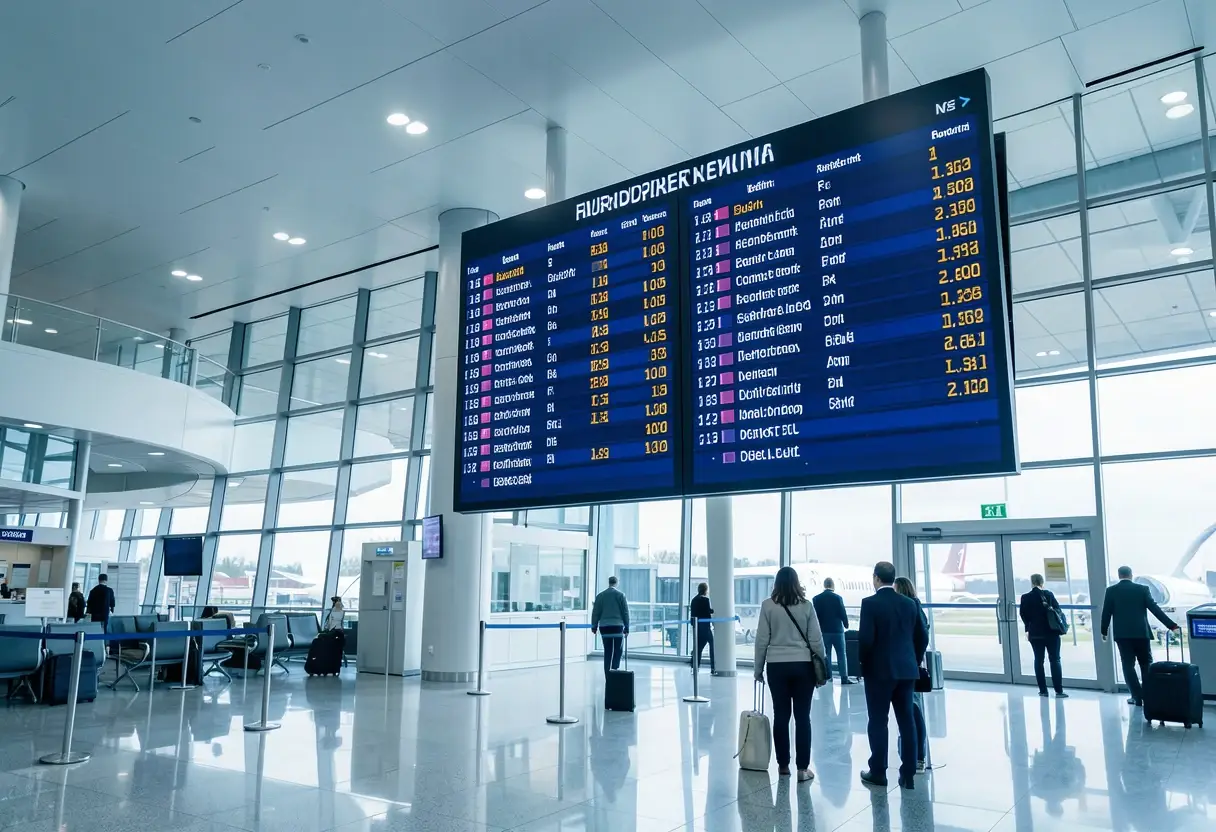
More than 10,000 flights were cancelled or delayed after the Federal Aviation Administration (the federal body controlling US airspace) halted all departures nationwide. Transportation Secretary Sean Duffy will hold a press conference on Saturday at 10:30 a.m. at Department of Transportation headquarters to update the country on flight operations.
The briefing follows one of the most disruptive air-traffic events in recent years. Travelers were left stranded at airports across the United States as carriers worked through the backlog. Duffy said Friday evening that the recovery was moving forward "slowly," and he warned that disruptions will continue — a caveat that matters more than the promise of a press conference.
What caused the ground stop?
According to Duffy, the trigger was not a cyberattack or a single point of failure but a saturation problem. Analog infrastructure — older, non-digital equipment — became overloaded with data, producing inconsistencies in the data feeding radar communications systems across the country. The FAA responded by halting all flights rather than risk operating on unreliable information.
Duffy offered one detail that cuts both ways. Recently installed equipment continued functioning during the incident, he said, while older technologies experienced failures. That claim supports the case for modernization. It also raises the question of why aging systems still carried enough of the national airspace workload to force a total shutdown.
The secretary has not, so far, specified which legacy systems failed, where the failures originated, or how the data overload accumulated. Those gaps will define Saturday's briefing. A modernization push already under scrutiny now faces renewed pressure to show it can prevent a repeat, not merely survive one.
What does this change for travelers?
In the short term, patience. Duffy's own assessment — recovery proceeding "slowly," with continued disruptions — signals that schedules will not return to normal immediately, even with the ground stop lifted. Passengers holding weekend flights should expect residual delays and cancellations as airlines reposition aircraft and crews.
The longer-term question is whether the incident accelerates the replacement of analog infrastructure with modern digital systems. Duffy's account implies the new equipment held up under stress. If that framing holds under examination, the outage becomes an argument for faster funding of the FAA's modernization program. If it does not, it becomes evidence that the program's priorities are misaligned with its weakest links.
What to watch at 10:30 a.m.
The press conference, streamed live from Department of Transportation headquarters, is Duffy's first extended appearance since the ground stop. The details to listen for are the ones he has not yet provided:
- Which specific legacy systems failed, and where
- Whether the data overload had a single origin or was distributed
- A timeline for restoring full capacity
- Any commitment — with dates and budgets — to retire the analog equipment involved
Until those questions receive answers, the administration's core explanation remains an assertion. The number that frames the political stakes is already public: over 10,000 flights cancelled or delayed, and a national airspace system that stopped entirely because its oldest components could not keep up with the data flowing through them.
via washingtonexaminer.com (Source)
More from Sophie Lindqvist
Show full bio
Correspondent covering money, funding and market shifts around corporate strategy and chief-executive leadership at CEO Frontier.
302 articles
Adjacent sheets
- Duffy Demands $50 Billion After FAA Outage Grounds US Flights
- FAA Grounds Every US Flight in Rare Nationwide Ground Stop
- Duffy Demands $50 Billion From Congress After FAA Ground Stop
- FAA Halts All US Departures as Air Traffic Control Outage Grounds Nation
- FAA Reopens US Airspace After Historic Nationwide Ground Stop