Field report W-75 / L9 · sheet /expansion
Expansion & MarketsFiled from the territory
Olo Challenges DoorDash and Uber Eats With Their Own Drivers
Olo's new app rents drivers from DoorDash, Uber and 25 other services, charges in-store menu prices, and claims 15-30% savings for customers across 800 brands.
- Grid
- W-75 / L9
- Surveyed
- November 11, 2026
- Reading
- 3 min read
- Correspondent
- Sophie Lindqvist
Field notes
- Olo's new app dispatches orders across 27 delivery services, including DoorDash, Uber and Grubhub, covering about 800 restaurant brands.
- The app charges in-store menu prices, which Olo says saves customers 15% to 30% versus typical delivery-app markups.
- About 40 million customers hold Olo accounts, and the company processes roughly 3.5 million orders daily, mostly takeout.
- Thoma Bravo acquired the previously public Olo in 2025.
- DoorDash has separately agreed to acquire Instacart, tightening competition in delivery.
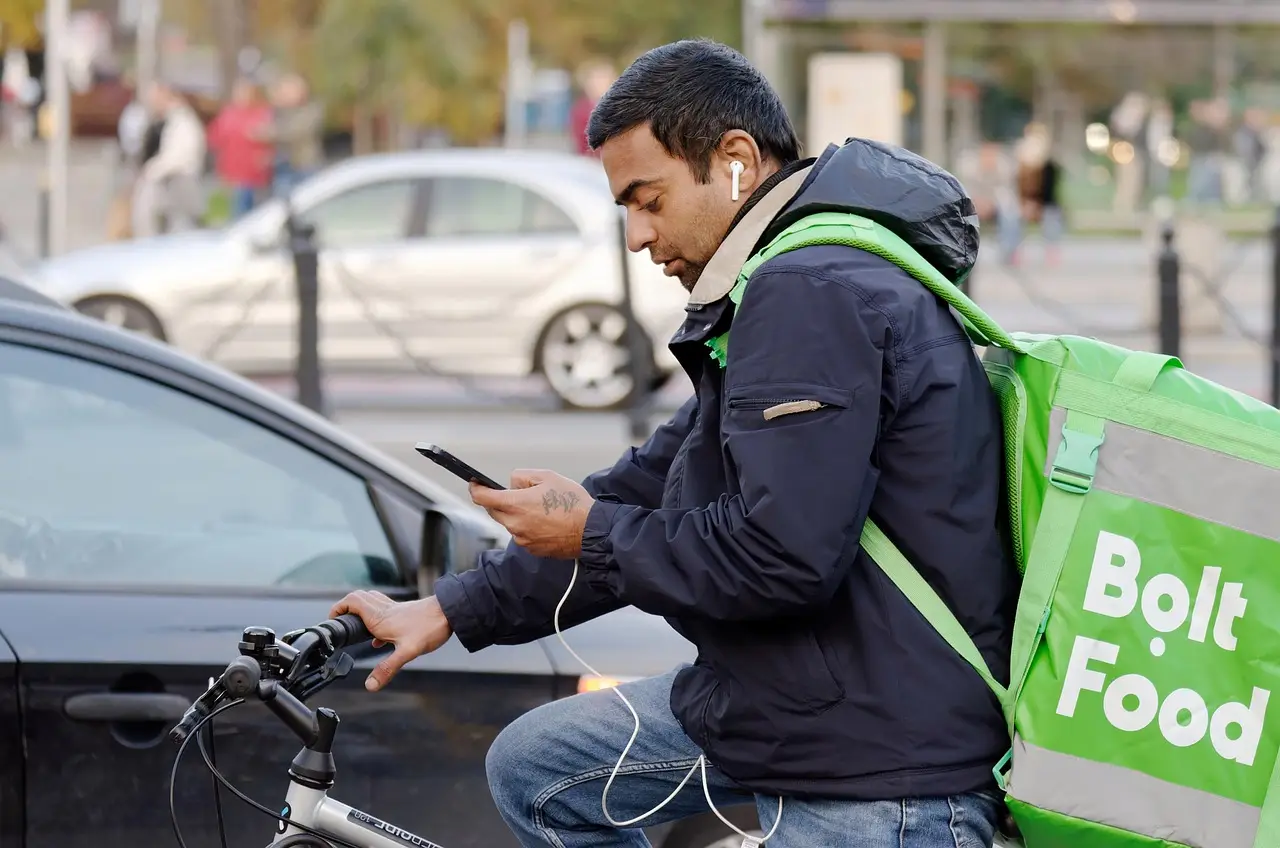
Olo, a restaurant software company with no delivery drivers of its own, has launched a consumer app that draws couriers from 27 delivery services — including DoorDash, Uber and Grubhub — to deliver food from roughly 800 restaurant brands. The move puts a two-decade-old backend provider in direct competition with the platforms whose workers it rents.
The app, unveiled last month, uses Olo's own ordering interface but dispatches orders to whichever delivery network offers the best combination of availability and cost at that moment. CEO and founder Noah Glass told Business Insider: "We're finding the best option at that moment."
The claim is simple: by arbitrating between rival networks, Olo can save restaurants and customers time and money. Whether that arbitrage holds at scale — or whether the incumbent platforms choose to restrict access to their driver pools — is the question Olo has not yet answered.
How does the pricing actually work?
The app charges customers the same menu prices they would pay in-store. According to Olo, that saves customers between 15% and 30%, because many third-party delivery apps mark up menu prices above what restaurants charge at the counter.
Glass frames the value proposition around perception. Many customers "just look at the menu price and say, 'Wow, restaurants have gotten way more expensive all of a sudden,'" he said.
That framing is convenient for Olo, but the underlying cost pressure is real. Rising food prices have pushed some diners toward meal deals or away from restaurants such as McDonald's altogether. An offer that removes markup from delivery menus taps directly into that sentiment — though customers will still pay delivery fees, which vary by service and order.
What does Olo bring to the fight?
For most of its twenty years, Olo has run ordering and payment systems for restaurants — a role Glass compares to Shopify's backend services for online sellers. Its restaurant clients include Panda Express and Five Guys.
About 40 million customers have created Olo accounts by ordering through those restaurants' own apps and websites, Glass said. The new app turns those scattered accounts into a single cross-brand login.
"They've gone to Waffle House, and they've ordered and created an account," Glass said. "They can now go to any of the other brands that use Olo accounts as a login mechanism."
Olo processes roughly 3.5 million orders daily, most of them takeout rather than delivery. The app handles both delivery and pickup. Thoma Bravo, a private equity firm, acquired the previously public company in 2025; Glass did not disclose financial targets for the consumer app.
Is the timing an accident?
Hardly. The delivery market is consolidating and diversifying at once. DoorDash has agreed to acquire grocery-focused Instacart in a deal that would extend its dominance in food delivery. Walmart, meanwhile, is using its own delivery workers to bring customers restaurant meals alongside weekly grocery orders.
Olo is entering with a differentiated pitch — in-store prices plus algorithmic selection across 27 networks — rather than a rival driver fleet. Its dependence on the very networks it undercuts remains the strategy's obvious fragility.
What does this change for AI-driven ordering?
Possibly more than it changes today's market. Olo is developing a protocol to accept orders from AI agents — automated shopping assistants that choose where to place an order on a customer's behalf. Glass argued that Olo's price advantage could prove decisive when such agents compare apps.
Order volumes through AI agents remain low for now. Glass nonetheless compared their potential to "another COVID-like or maybe even larger wave" of orders. That is a forecast, not a fact; no current volume data supports it, and he offered none.
The skeptical reading: Olo has built a promising aggregation layer on infrastructure it does not control, aimed at customers who feel overcharged, betting on an AI ordering shift that has not yet materialized. Each element is plausible. None is yet proven at scale.
via feeds.businessinsider.com (Source)
More from Sophie Lindqvist
Show full bio
Correspondent covering money, funding and market shifts around corporate strategy and chief-executive leadership at CEO Frontier.
226 articles
Adjacent sheets
- Bilt Targets Small Business With AI Platform Neighborhood OS
- Portillo’s to close up to 9 restaurants despite 7% revenue growth
- Uber Freight Puts Revenue Growth Ahead of Near-Term Profit
- ChatGPT Ads Hit $1 Billion Run Rate, but ROI Remains Unproven
- Target sets three-pillar growth plan: grocery, partnerships, home reset