Field report W-59 / L9 · sheet /macro
Boardroom MacroFiled from the territory
Nigeria Secures $500m World Bank Boost for NG-CARES
Nigeria has drawn an extra $500 million from the World Bank for NG-CARES, allocating $490 million to states as a buffer against economic reform shocks.
- Grid
- W-59 / L9
- Surveyed
- November 16, 2026
- Reading
- 3 min read
- Correspondent
- Olivia Hart
Field notes
- World Bank approved an additional $500 million for Nigeria's NG-CARES programme
- $490 million of the additional financing has been allocated to participating states
- 17 states have submitted eligibility documents to the World Bank; six more are preparing submissions
- Bagudu announced the funding at a five-day technical meeting opening on Monday
Nigeria has secured an additional $500 million from the World Bank for its NG-CARES programme, with $490 million of that sum already allocated to participating states. Senator Abubakar Atiku Bagudu, minister of Budget and Economic Planning, announced the figures on Monday at the opening of a five-day technical meeting on the programme's additional financing.
"The additional financing will help communities withstand economic shocks and cushion the effects of ongoing economic reforms," Bagudu said. The framing matters for practitioners: Abuja is positioning the money explicitly as a buffer against the disruption caused by its own reform agenda, not as a standalone welfare scheme.
How the money is structured
Dr Abdulkarim Obaje, national coordinator of the NG-CARES Support Unit, confirmed the allocation split. "$490 million of the $500 million additional financing has been allocated to the states. State governments are central to the implementation of this programme," he said.
That concentration of funds at state level puts governors and their commissioners — not federal agencies — in the delivery seat. Obaje explained that the implementation framework will strengthen coordination between federal and state institutions, with governors providing leadership at state level and relevant ministries supporting budgeting, monitoring and programme delivery.
The readiness picture is uneven. Obaje disclosed the current state of play:
- 17 states have submitted eligibility documents to the World Bank for clearance
- Six further states have met federal requirements and are preparing to forward their documents
- Outstanding documentation and eligibility issues are being addressed so participating states can proceed with implementation
"Outstanding documentation and eligibility issues are being addressed to ensure that participating states can proceed with implementation," he said.
What does the minister want states to do with it?
Bagudu urged participating states to treat the additional financing as a proof-of-concept exercise. "States should use this opportunity to demonstrate the impact of targeted interventions and attract further investments from the private sector and development partners," he said.
For state officials, that instruction translates into a measurable-results imperative. "I encourage state representatives to contribute ideas and seek clarification on implementation procedures so that the programme delivers measurable results," Bagudu added.
He grounded the case for resilient social protection in a concrete example from the COVID-19 pandemic. Financial constraints at the time forced Kebbi State to suspend some social intervention programmes, including support for people living with mental health challenges. "Experiences such as these underscore the importance of sustainable social protection and community resilience programmes," the minister said.
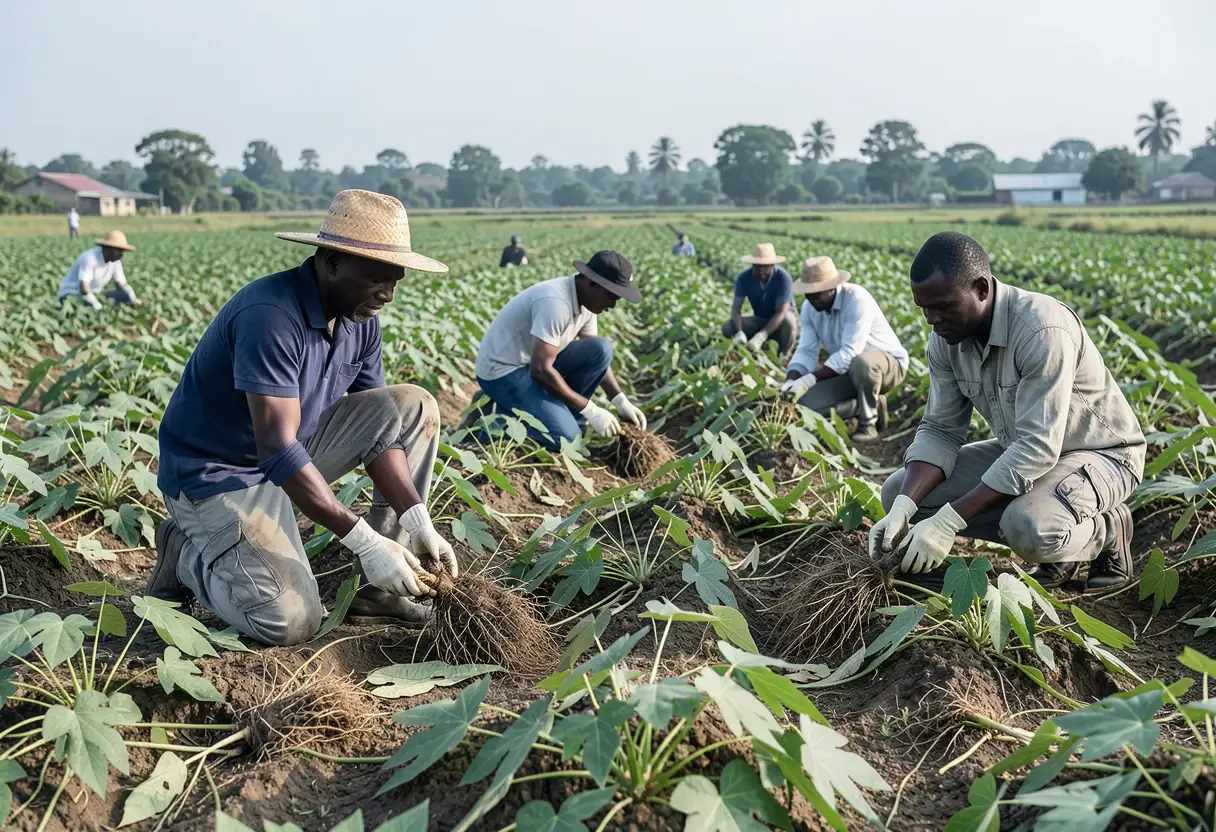
Bagudu also cited a recent visit to cassava-farming communities in Enugu State to argue for better agricultural support. Farmers there need improved seedlings and stronger backing to raise productivity, he said, and without it they risk remaining trapped in poverty.
Where the political backing sits
Dr Doris Uzoka-Anite, minister of state for Budget and Economic Planning, commended the World Bank for approving the additional financing and made the case for continuity. "NG-CARES is an impactful intervention that should be sustained to reach more vulnerable Nigerians," she said.
Her assessment draws on direct state-level experience: Uzoka-Anite previously served as a commissioner in Imo State. "The programme has demonstrated significant results at the state level," she said.
She credited governors, commissioners, programme coordinators and implementation teams for progress so far, and set expectations for the phase ahead. "I urge governors, commissioners, programme coordinators and implementation teams to sustain their commitment in the next phase," Uzoka-Anite said.
What happens this week
The five-day technical meeting now underway is expected to do three things: strengthen coordination between the tiers of government, address implementation bottlenecks, and establish a common understanding of the programme's operational requirements.
For state teams, the practical takeaway is straightforward. The money is committed, the bulk of it sits with the states, and the remaining gate is documentation — the six states still preparing submissions and any unresolved eligibility questions will determine how quickly the $490 million starts moving.
via leadership.ng (Source)
More from Olivia Hart
Show full bio
News editor covering regulation, policy and their impact on corporate strategy and chief-executive leadership at CEO Frontier.
443 articles
Adjacent sheets
- Nigeria’s $200bn Gas Gap Requires Foreign Investment
- Nigeria Asks EU to Help Turn Grid Reform Into Bankable Deals
- FGN Power Seeks $20bn to Expand Nigeria’s Electricity Supply
- Nigeria's N68trn Budget Works Out at N772 Per Person Daily — Soludo
- Makinde Camp Demands Accounting of ₦11.2 Trillion Oil-Backed Loans