Field report SW-8 / L6 · sheet /leadership
CEO LeadershipFiled from the territory
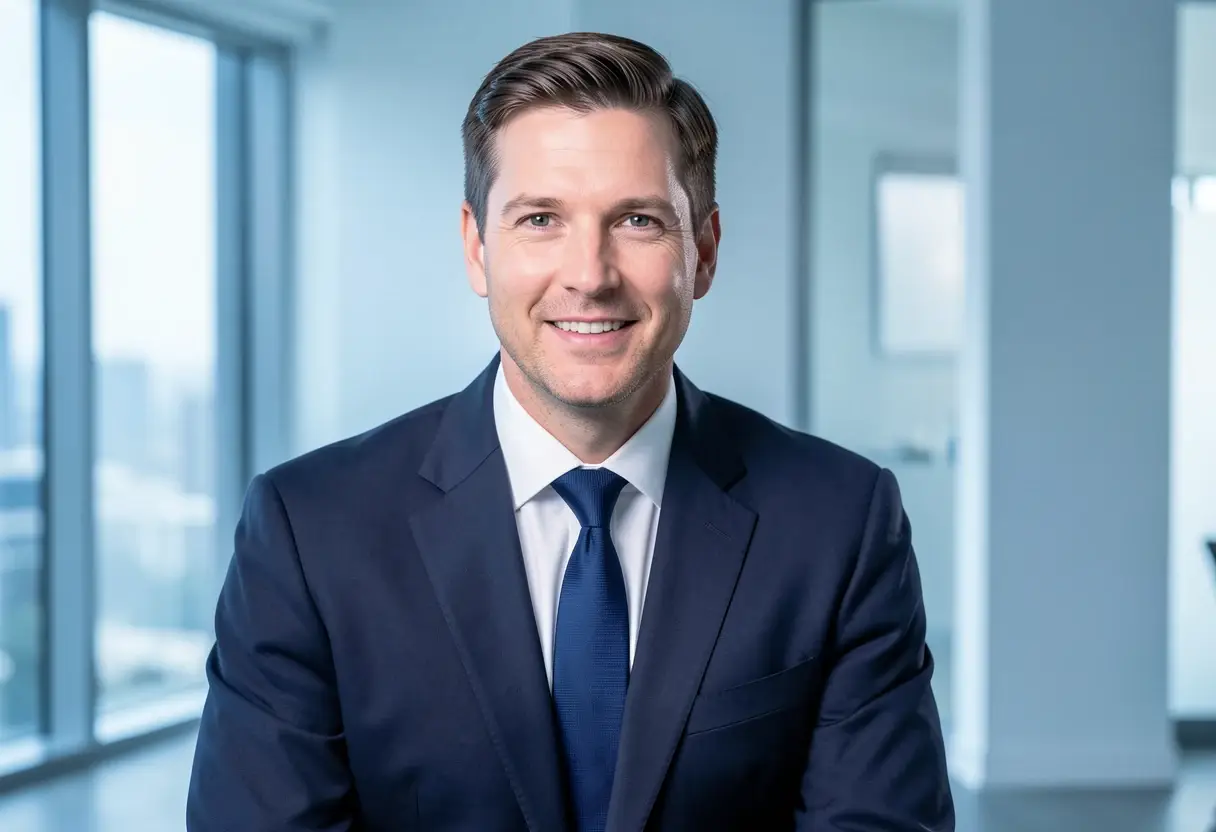
Michael Dell calls for AI safeguards — and a government hand in writing them
Dell Technologies CEO Michael Dell says AI models and agents need "bounded permissions" and human oversight — and wants government involved in setting the rules.
- Grid
- SW-8 / L6
- Surveyed
- October 13, 2026
- Reading
- 3 min read
- Correspondent
- Olivia Hart
Field notes
- Dell Technologies CEO Michael Dell called for 'bounded permissions' on AI models and agents
- Dell said AI systems require human oversight over consequential decisions
- Dell endorsed a government role in setting AI safeguards but declined to specify what it should look like
Michael Dell wants AI models and agents to operate under "bounded permissions" with human oversight — and he says government should help set those rules, though he declined to say how.
The Dell Technologies chief executive laid out his position in starkly practical terms. AI systems, in his view, should never hold open-ended authority to act. Permissions must be capped, and a human must stay in the loop when the machine makes consequential calls.
What did Dell actually propose? Two concrete mechanisms, and one deliberate omission.
- Bounded permissions. AI models and agents should operate within limits on what they can access and do, rather than with unrestricted freedom.
- Human oversight. Decisions made by AI systems should remain subject to review and control by people.
- A government role — unspecified. Dell said government should have a part in setting safeguards, but declined to describe what that role should look like in practice.
For operators running AI agents inside large enterprises, the first two points will read less like news and more like confirmation. Bounding what an agent can touch — files, systems, budgets — is already standard practice in serious deployments. The founder of a company that sells the infrastructure this AI runs on is now saying the same thing out loud.
Why does the omission matter?
The gap in Dell's position is the interesting part for anyone tracking AI policy. Calling for safeguards is consensus territory; nearly every major technology executive has done so. Naming who writes the rules, and with what enforcement power, is where positions diverge.
Dell stepped up to that line and stopped. He endorsed a government role in setting safeguards but declined to specify what it should involve — whether regulation, standards bodies, voluntary frameworks, or something else entirely.
That leaves the practical question open. Executives now face a patchwork of emerging AI rules across jurisdictions, and a call for government involvement without detail gives them little to plan against. If Washington moves toward mandatory guardrails for AI agents, companies that already run bounded-permission architectures will adapt faster than those that gave agents broad access.
What changes for practitioners?
Dell's framing turns a governance debate into an engineering checklist. "Bounded permissions" is a term practitioners can act on: it implies access controls, scoped authority for agents, and audit trails showing where a human approved a machine's action.
Human oversight carries its own weight. It suggests Dell does not see AI systems — even highly capable ones — as candidates for unsupervised operation in the near term. A person remains accountable for what the agent does.
The comparison worth holding onto: this is the same logic banks apply to trading systems, where algorithms execute within hard limits and compliance staff watch the boundaries. Dell is effectively asking executives to treat AI agents the same way.
The backdrop
Dell Technologies has staked much of its business on the AI buildout, selling the servers and infrastructure that enterprises use to train and deploy models. His call for restraint comes from within the industry, not from outside it.
That position matters. When the CEO of a major AI infrastructure vendor says agents need bounded permissions and human oversight, he is describing constraints his own customers will have to build. Safeguards, in this telling, are not a brake on the market — they are part of the product.
What he left unsaid — the shape of government involvement — is now the question the industry will have to answer, with or without him.
via Quartz (Source)
More from Olivia Hart
Show full bio
News editor covering regulation, policy and their impact on corporate strategy and chief-executive leadership at CEO Frontier.
77 articles
Adjacent sheets
- Gartner's 2026 Cybersecurity Trends: Agentic AI, Quantum and Machine Identities Top the List
- Microsoft's Nadella Calls for 'Emergency Brake' on Frontier AI Models
- Money, Not Silicon: Intel and Broadcom CEOs Flag Capital as AI's Real Limit
- Goldman Sachs Maps 2026 Board Agenda Around AI, Activism, Delaware Law
- TikTok CEO and Microsoft Executive Warn AI Hype Outruns Reality