Field report NE-64 / L5 · sheet /macro
Boardroom MacroFiled from the territory
Greater Bay Area rivals Silicon Valley on innovation, not prosperity
China’s $2.1 trillion Greater Bay Area led global innovation rankings in 2025 and 2026, yet widening income disparities and Hengqin’s population shortfall show its Silicon Valley challenge remains unfinished.
- Grid
- NE-64 / L5
- Surveyed
- November 20, 2026
- Reading
- 5 min read
- Correspondent
- Elena Vasquez
Field notes
- The GBA has 88 million people and $2.1 trillion in GDP across three legal systems, currency regimes and customs territories.
- WIPO ranked Shenzhen–Hong Kong–Guangzhou the leading global innovation cluster in 2025 and 2026.
- Hengqin counted 50,000 residents at the end of 2025 against a 280,000 target for 2020.
- Hong Kong’s per-capita GDP exceeds Zhaoqing’s by more than five to one, while Shenzhen’s is three times higher.
- Guangdong grew 4.6% in the first three quarters of 2026, matching the national rate for the first time since the third quarter of 2021.
By Elena Vasquez
China’s 88-million-person Greater Bay Area has a $2.1 trillion economy and contains the world’s leading innovation cluster, but its gains remain concentrated in Hong Kong and Shenzhen.
The region links nine Pearl River Delta cities, including Shenzhen, Zhuhai and Guangzhou, with the Hong Kong and Macau special administrative regions. Its 88 million residents exceed those of Germany or Turkey, while its $2.1 trillion economy approaches Canada’s, yet the region spans three legal systems, currencies and customs territories.
Formalized in 2017, the GBA combines Hong Kong’s financial scale with Shenzhen’s hardware and software capability. For now, that makes it primarily a Hong Kong–Shenzhen success rather than a uniformly successful regional model, despite Beijing’s decade-long push to integrate capital, research and development, talent and manufacturing capacity.
Has the region caught Silicon Valley?
The World Intellectual Property Organization’s Global Innovation Index ranked Shenzhen–Hong Kong–Guangzhou as the world’s leading innovation cluster in both 2025 and 2026. The nine mainland GBA cities filed more than one-third of China’s international patent applications in 2025, according to state media, while the wider region accounts for one-fifth of the country’s unicorn startups.
“The original idea was to compete with the [U.S.] Bay Area. That’s exactly why the name is the Greater Bay Area,” said Alicia Garcia-Herrero, chief economist for Asia-Pacific at Natixis. The policy goal, according to Pamela Lam, Hong Kong’s commissioner for Greater Bay Area development, is not to make member cities identical but to make their systems interoperable and complementary.
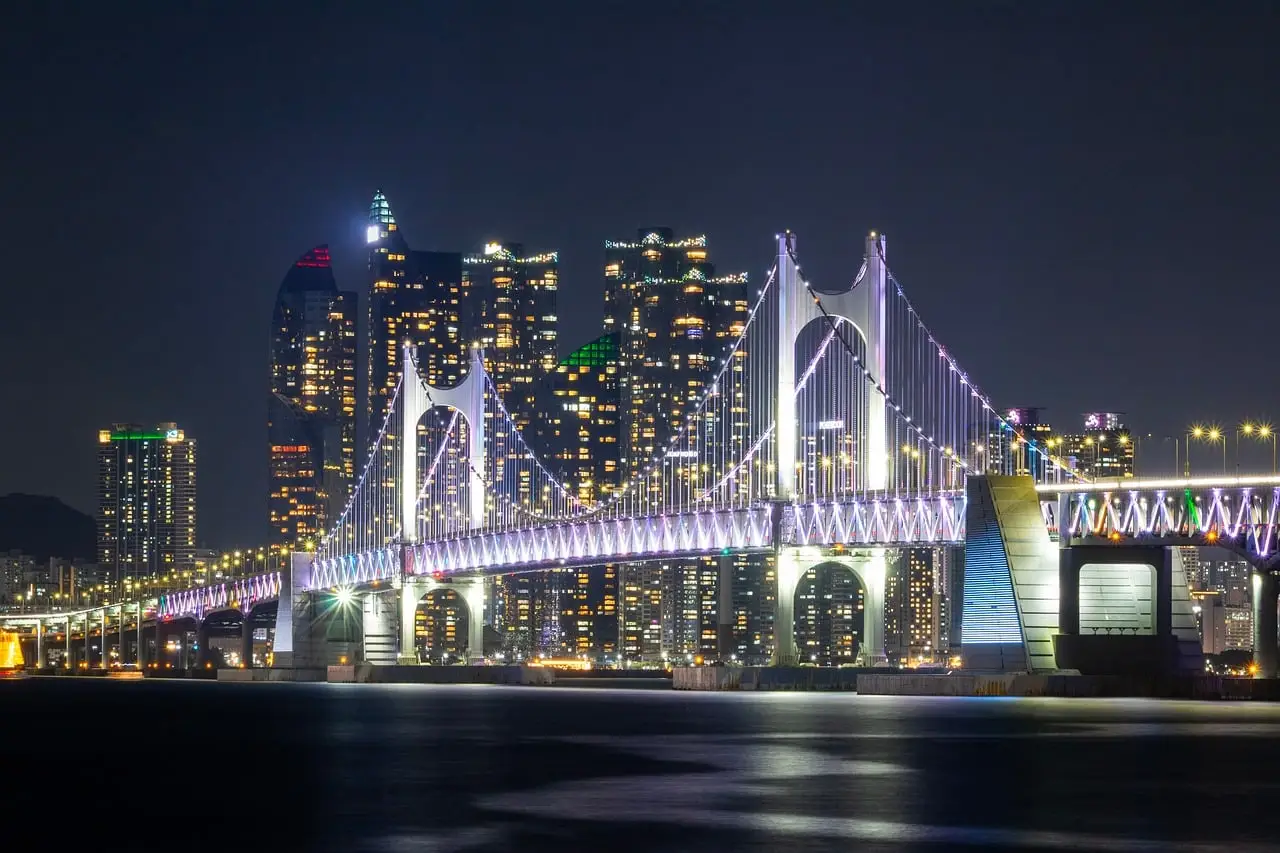
That approach would create a complete innovation and industrial ecosystem, Lam said, linking laboratories to factories through a high-value-adding supply chain. Hundreds of kilometers of railway and the estimated $20 billion Hong Kong–Zhuhai–Macau Bridge support a one-hour living circle among major cities, shortening travel and fostering collaboration. The bridge is the world’s longest bridge-and-tunnel sea crossing.
The regional model remains more deliberate than Silicon Valley’s. Mehran Gul, author of The New Geography of Innovation, said the U.S. Bay Area developed more organically and partly by accident, while the GBA’s planned division of labor has been central to its formation.
Gul said China’s technology industry no longer resembles a U.S. mirror lagging five or six years behind, as it did 10 years ago. He attributes the change to fundamental innovation and the GBA’s capital, research and manufacturing linkages, which he said the region has substantially strengthened.
For more than four decades, the Pearl River Delta has been a core Chinese economic engine, a transformation that began when Beijing designated border-market town Shenzhen, near then-British Hong Kong, as a business-friendly special economic zone. Hong Kong’s financial sector expanded as China opened, Shenzhen attracted founders from across the country, and Dongguan and Foshan supplied manufacturing scale that made the delta the “world’s factory.”
Why has Hengqin fallen short?
Hengqin, an island in Zhuhai across the strait from Macau and three times Macau’s size, remains a key test of whether infrastructure can produce an ecosystem. In 2009, the island housed oyster farmers and fishermen, and authorities targeted 280,000 residents by 2020; its population at the end of 2025 was only 50,000.
Hengqin now hosts an In-Depth Cooperation Zone run by Guangdong province and Macau, with multilane highways, striking architecture and manicured parks. Its stated purpose is to diversify Macau’s gambling-dependent economy by drawing on mainland talent and manufacturing capacity, but those facilities have attracted far fewer people than the original plan projected.
Why are the gains so uneven?
Guangdong grew more slowly than the national average in every year from 2021 through 2025. Garcia-Herrero said the GBA outpaced the rest of China before COVID but no longer does, as the property downturn and youth unemployment weigh on Guangdong; increased AI-powered industrial automation adds to the employment pressure.
Jerry Patchell, an associate professor emeritus at Hong Kong University of Science and Technology and author of a book on the region, said productivity and value creation have not spread widely. Hong Kong and Shenzhen are pulling away, Guangzhou is not far behind, and other cities are progressing at markedly different rates.
The income gap is material: Hong Kong’s per-capita GDP exceeds that of Zhaoqing, the GBA’s poorest city, by more than five to one; Shenzhen’s is three times Zhaoqing’s. Garcia-Herrero said preferential financial measures for the GBA also remain limited: the stated argument is that Hong Kong should finance Guangdong, but in practice Hong Kong channels capital to the mainland as a whole.
What could close the gap in 2026?
Guangdong’s economy grew 4.6% in the first three quarters of 2026, matching China’s national rate for the first time since the third quarter of 2021, according to the provincial statistics bureau. The figure marks an early recovery, not evenly distributed prosperity.
Stephanie Gao, a professor of practice at City University of Hong Kong, said demand for AI infrastructure, robotics, autonomous vehicles and other physical-AI applications is bringing new growth impetus. The GBA’s advantage, she said, comes from tight integration among hardware design, component supply and software-algorithm iteration. Gul put the operating advantage more plainly: companies in the region iterate on products in days rather than months.
Elwin Ho, a Macau native and cofounder and CEO of Hengqin-based speech-recognition company Pachira, recently visited the U.S. Bay Area and found software and algorithm development there but hardware production in Shenzhen. Ho remains bullish on Hengqin and believes the area needs more time to attract residents and businesses.
Gul agrees that its underused space will draw residents and businesses: “There are very few Chinese cities where the idea of ‘Build it and they will come’ has not worked out.”
via fortune.com/feed/ (Source)
More from Elena Vasquez
Show full bio
Staff writer covering companies, deals and strategy in corporate strategy and chief-executive leadership at CEO Frontier.
552 articles
Adjacent sheets
- Two Reports, Two Southeast Asia Ecommerce Markets: $157.6 Billion or $226 Billion
- ASEAN Digital Economy Heads for $1.1 Trillion, If Small Firms Catch Up
- Banned Nvidia Chips Surface in Shanghai Data Center Filings, Tied to Alice Huang
- Chinese AI Models Now Six to 12 Months Behind U.S., Says Kai-Fu Lee
- Nvidia's $96.2 Billion Quarter Faces Taiwan and Governance Risks