Field report S-87 / K4 · sheet /expansion
Expansion & MarketsFiled from the territory
Ford Starts LFP Cell Production in Michigan, Claims US First
Ford ships first LFP cells from BlueOval Battery Park Michigan under licensed CATL technology, targeting 40 cells a minute ahead of the Fathom truck's Q4 2027 launch.
- Grid
- S-87 / K4
- Surveyed
- November 20, 2026
- Reading
- 3 min read
- Correspondent
- Sophie Lindqvist
Field notes
- Ford shipped the first LFP prismatic cells from BlueOval Battery Park Michigan to Louisville Assembly Plant for Fathom prototypes.
- Ford claims its line delivers 40 cells per minute, among the fastest LFP prismatic lines outside China.
- Cells use knowledge and services licensed from CATL, the world's largest lithium-ion battery maker.
- The Ford Fathom, first vehicle on the UEV platform, is planned for Q4 2027 launch.
- LFP chemistry uses no nickel or cobalt, lowering costs and improving charging durability.
Ford says it has shipped the first lithium iron phosphate (LFP) prismatic battery cells from its BlueOval Battery Park Michigan plant, declaring itself the first automaker to deliver US-made LFP batteries for mainstream consumer vehicles. The cells are bound for the Louisville Assembly Plant, where they will power prototypes of the Ford Fathom electric truck. The claim of a US first rests on Ford's own framing; no independent verification accompanied the announcement.
The stakes are both automotive and political. The cells rely on battery cell knowledge and services licensed from Contemporary Amperex Technology Co. Limited (CATL), the world's largest lithium-ion battery manufacturer and a Chinese supplier whose involvement in US manufacturing has drawn scrutiny in Washington. Ford did not disclose the financial terms of the licensing arrangement or how much of the production know-how remains dependent on CATL over time — a gap that matters for anyone assessing whether this is genuine technology transfer or rented capability.
What does the technology change for buyers?
LFP chemistry uses no nickel or cobalt, two of the most expensive and geopolitically fraught metals in battery supply chains. That composition helps hold down cell costs, which Ford argues will support more affordable electric vehicles. The chemistry is also regarded as more durable over years of charging and use, though Ford offered no warranty terms, cycle-life figures or price targets alongside the announcement. Cheaper cells do not automatically translate into cheaper cars until Ford commits to sticker prices.
The plant has a second commercial purpose. Ford says the cells will supply Ford Energy's battery energy storage business in Kentucky, giving the Michigan line a demand buffer if EV uptake softens. The company did not specify what share of output goes to storage versus vehicles.
How fast can the line actually run?
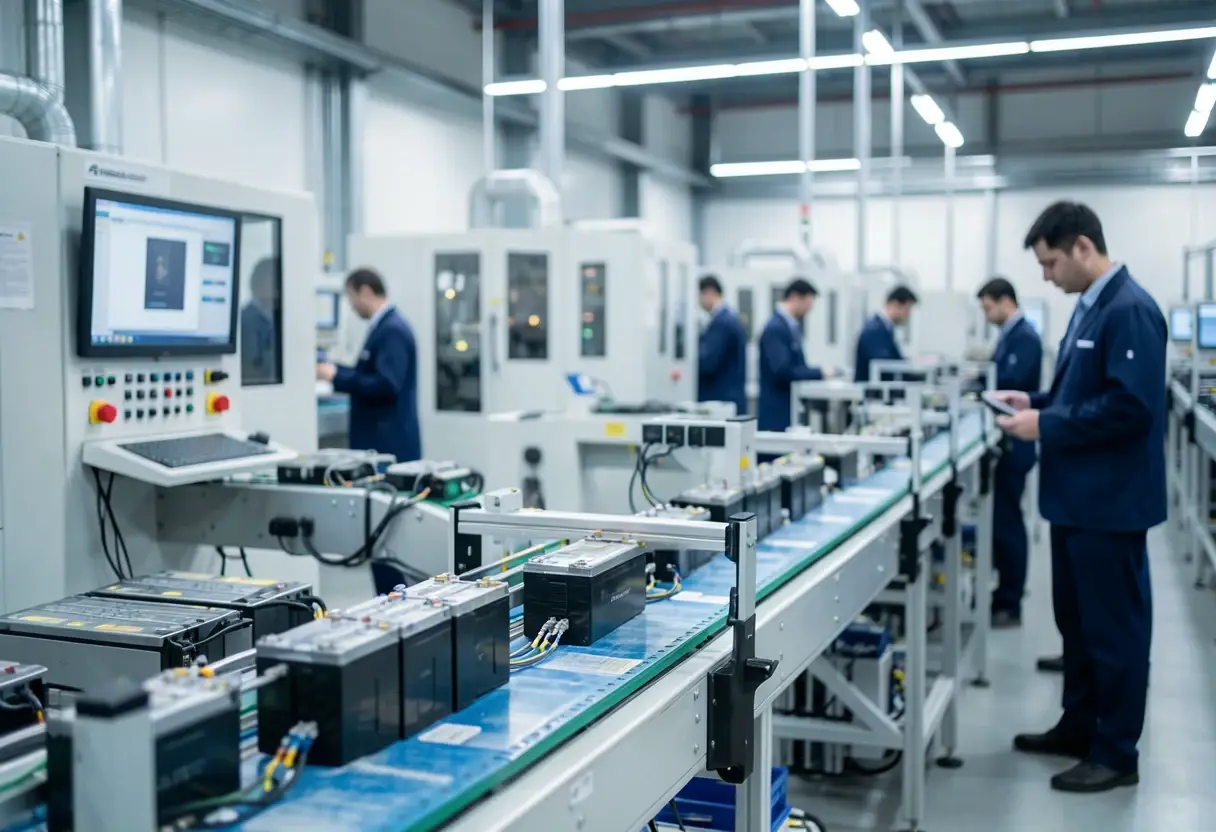
Ford claims the BlueOval Battery Park assembly lines can deliver forty cells every minute, a pace the company calls "among the fastest LFP prismatic battery assembly lines outside of China." The qualifier does the heavy lifting in that sentence: the benchmarks for speed remain in China, and Ford published no yield rates, reject rates or cost-per-cell data to substantiate the efficiency argument. Speed drives down battery costs only if defects stay low at full tempo.
On quality control, Ford says plant employees use AI-powered image recognition and other tools to spot defects during production. The company did not quantify defect rates or say how the systems were validated — standard omissions, but relevant when a new chemistry and a new line start simultaneously.
When does a production car arrive?
The Ford Fathom truck will be the first vehicle built on Ford's Universal Electric Vehicle (UEV) platform, the company's common electric architecture for future models. Launch is planned for Q4 2027 at the Louisville Assembly Plant — more than two years after the first cells roll off the line. That gap leaves room for schedule slippage, competitive pressure from other LFP entrants, and policy shifts affecting licensed Chinese technology in US plants.
For now, the milestone is real: cells are shipping, the line is running, and a US automaker is manufacturing a cobalt-free chemistry at scale for consumer cars. What Ford has not yet shown is the number that would settle the argument — the price of the vehicle those cells are meant to make affordable.
via just-auto.com (Source)
More from Sophie Lindqvist
Show full bio
Correspondent covering money, funding and market shifts around corporate strategy and chief-executive leadership at CEO Frontier.
528 articles
Adjacent sheets
- Posco secures CATL lithium supply agreement through 2028
- BMW splits Gen6 battery supply between Samsung SDI in Europe, LGES in US
- EnergyX Bets $2 Billion Trafigura Deal Proves Lithium's Fast Track
- Why Foreign Capital Owns So Much of Northern Minnesota Industry
- India bans lithium-ion battery black mass exports to retain feedstock