Field report NW-84 / P5 · sheet /macro
Boardroom MacroFiled from the territory
China dependence threatens UK net zero security, report says
Policy Exchange says China supplies 91% of UK solar imports and 94% of wind-power magnets, while critics warn that clean-energy dependence and supply-chain exposure threaten British security.
- Grid
- NW-84 / P5
- Surveyed
- November 19, 2026
- Reading
- 3 min read
- Correspondent
- Elena Vasquez
Field notes
- China accounts for 91% of the UK’s solar imports.
- China accounts for 94% of the permanent magnets used in wind power.
- China accounts for around 70% of global battery production used in electric vehicles.
- Britain’s £40bn automotive export industry faces supply-chain risks linked to Chinese control of key materials.
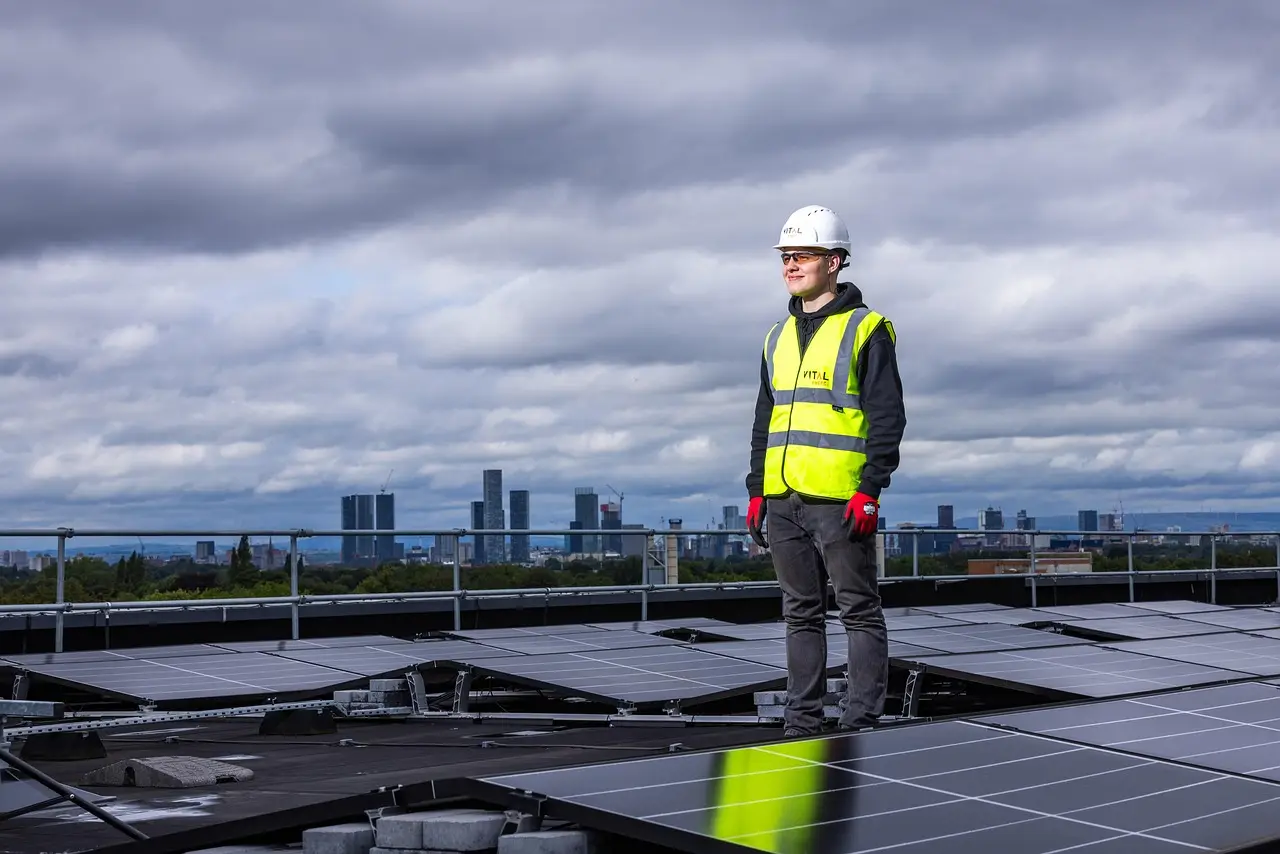
China accounts for 91% of the UK’s solar imports, or more than nine in 10, according to Policy Exchange, placing a strategic supplier at the centre of Britain’s net-zero security debate.
The report, titled The China Trap, was published shortly before President Donald Trump’s trilateral meeting with Xi Jinping and Vladimir Putin. It warned that the transition to net zero has “shifted…into the hands of a hostile state”.
How exposed are the UK’s clean-energy supply chains?
- China accounts for 94% of the permanent magnets used in wind power.
- China accounts for around 70% of global battery production used in electric vehicles.
- The report said China’s clean-energy dominance serves as a “tool of economic statecraft”, with Beijing’s export controls restricting access to strategic supplies.
The report also said Royal Navy drone boats were reportedly transmitting data to Chinese internet addresses. It linked those security concerns to wider economic findings showing that dependence on China creates risk for critical sectors, including energy.
Britain’s automotive export industry, worth £40bn, faces exposure because China controls key supplies, the report said. That concentration gives China leverage over export access at the point when Britain needs secure supplies to build its net-zero economy.
What do critics say?
Shadow foreign secretary Tom Tugendhat accused the government of overseeing a policy of “capitulation” in its trade relations with China. He argued: “We have bowed to the energy output of China, swapping carbon dependency in the Middle East for solar panels in the Middle Kingdom.”
Labour peer Maurice Glasman said it was “strategically vital that Britain uncouples itself from China if it is to be a sovereign, prosperous and secure nation”. The disagreement centres on whether Britain can expand clean energy while keeping strategic supply chains outside Chinese control.
What did the three leaders agree?
Trump, Xi and Putin agreed that the United Nations should be reformed, fuel production should be increased, international courts should not “abuse their jurisdiction”, and nuclear war “must not be fought”. The historic meeting laid bare a shift in global powers amid conflicts in Eastern Europe and the Middle East and a potential invasion of Taiwan.
The report and those agreements came amid fears that the three leaders could strike a deal to carve up regional power and put Britain’s national security under threat. Policy Exchange links the geopolitical context to a specific risk for Britain: clean-energy procurement cannot be separated from export controls, espionage or regional conflict.
How does Labour defend its China policy?
Labour’s manifesto says the government should “co-operate where we can, compete where we need to, and challenge where we must”. That wording sets the government’s formal position on trade and security.
On Thursday morning, Defence Secretary Wes Streeting defended that approach ahead of Chinese defence counterpart Admiral Dong Jun’s trip to London that day. In an article in The Times, Streeting wrote: “Our security services have been open about the risks arising from cyberattacks, espionage and foreign interference.”
He added: “But recognising the depth of these disagreements must not lead us to the dangerous conclusion that co-operation is impossible or undesirable.”
Streeting also wrote: “Climate change will not respect ideological boundaries. China is both the world’s largest emitter of greenhouse gases and its greatest producer of renewable energy technologies. No credible global response can succeed without its participation.” That position sets cooperation against the report’s conclusion that dependence on China can become an instrument of state power.
The policy test raised by the report for Labour is whether it can reduce supply-chain concentration while preserving the technology relationship that Streeting calls essential to global climate action.
via cityam.com (Source)
More from Elena Vasquez
Show full bio
Staff writer covering companies, deals and strategy in corporate strategy and chief-executive leadership at CEO Frontier.
489 articles
Adjacent sheets
- China Built 7 Million Cars in Q1 While the EU Watched
- China's Trade Surplus Hits $133.5 Billion, Second Largest on Record
- China's Exports Jump 36.3% as Trade Surplus Hits Record $133.5 Billion
- Insider Interpreter: Why Officials Say the Huang Scandal Is a Real Security Problem
- RMB Opens Beijing Advisory Desk as China-Africa Trade Passes $350bn