Field report N-13 / M3 · sheet /strategy
Corporate StrategyFiled from the territory
Benioff Lifts the Lid on Salesforce's Annual Strategy Document
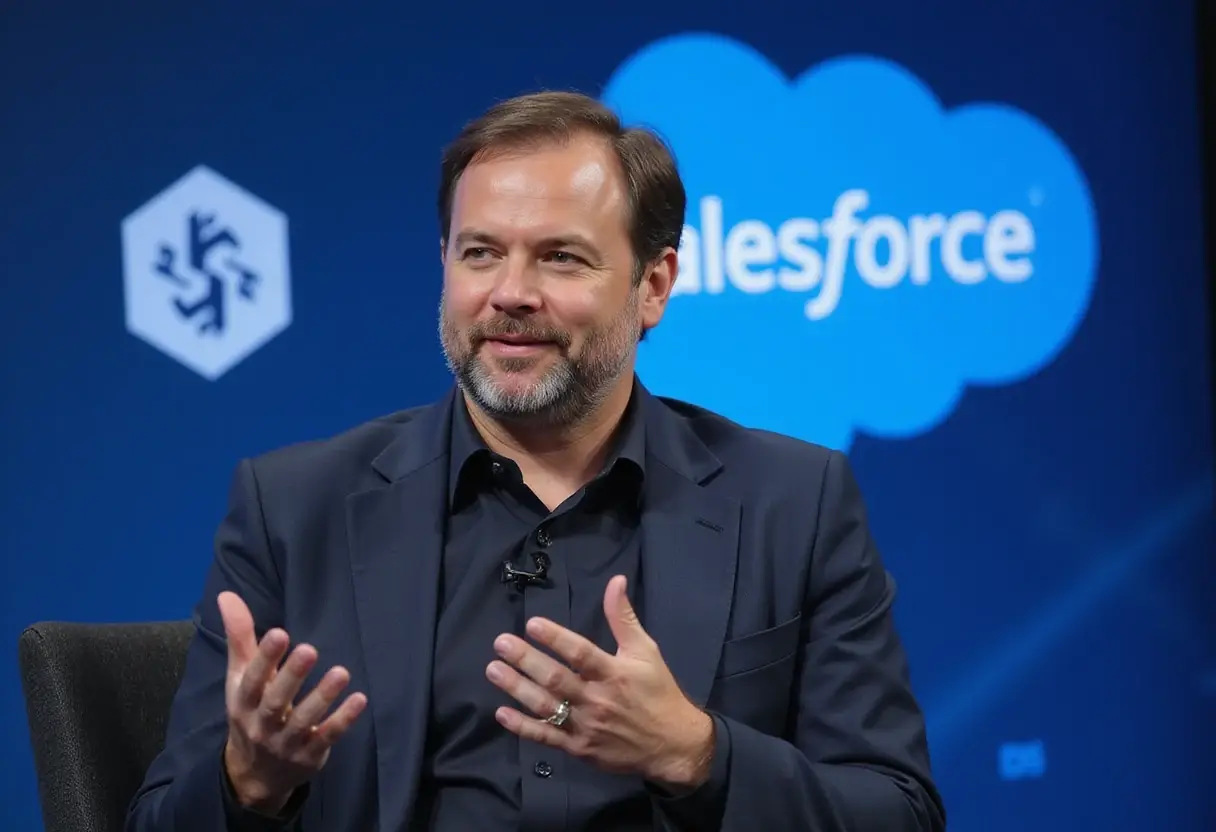
Salesforce CEO Marc Benioff has revealed details of the company's annual strategy document, offering a rare public look at how the cloud software giant plans its fiscal year.
- Grid
- N-13 / M3
- Surveyed
- October 9, 2026
- Reading
- 3 min read
- Correspondent
- Sophie Lindqvist
Field notes
- Marc Benioff, chairman and CEO of Salesforce, revealed details of the company's annual strategy document
- The disclosure was reported by Business Insider
- Salesforce, founded in 1999, helped pioneer the Software-as-a-Service delivery model
- Salesforce operates across sales cloud, service cloud, marketing cloud, and Einstein AI platforms
- Annual strategy documents at major cloud vendors typically set direction across revenue, product, capital, and organizational priorities
Marc Benioff, chairman and CEO of Salesforce, has publicly revealed details of the company's annual strategy document, according to a Business Insider report. The disclosure offers a rare look at the planning apparatus inside one of the largest enterprise software companies in the world.
Salesforce, which Benioff founded in 1999, helped establish the Software-as-a-Service (SaaS) model that now dominates business software delivery. Annual strategy documents at major cloud vendors typically guide investment in product, engineering, sales, and capital deployment across global operations.
What does the strategy document cover?
Internal strategy memos at technology companies of this scale generally set direction across four pillars:
- Revenue targets and customer acquisition priorities
- Product roadmap and engineering investment areas
- Capital allocation, including M&A appetite
- Organizational structure and executive accountabilities
Public details of such documents are uncommon. Most executives treat the annual plan as an internal blueprint. Benioff's decision to share details externally signals a different posture toward transparency.
Why does Benioff's disclosure matter?
The move carries strategic weight. Investors, customers, and competitors now gain a partial map of how Salesforce plans to compete in the coming fiscal year. Such visibility can shape market expectations, influence partner decisions, and frame the narrative ahead of upcoming earnings calls.
Benioff has long cultivated a high-profile public profile. He is known for direct customer engagement, frequent media appearances, and a communications style that contrasts with the more reserved approach of many enterprise software CEOs. Sharing an internal planning artifact fits that established pattern.
What is the current Salesforce outlook?
Salesforce operates across multiple business segments, including sales cloud, service cloud, marketing cloud, and its Einstein artificial intelligence platform. The company has invested heavily in generative AI capabilities as competition intensifies from Microsoft, Oracle, and a growing field of AI-native challengers.
Enterprise software customers are also demanding more integrated platforms and clearer returns on AI spending. Pricing pressure on legacy CRM products has shaped recent quarterly results across the sector. Any annual strategy document at Salesforce would have to address these competitive dynamics directly.
What signals does this send to the market?
By surfacing the document, Benioff positions Salesforce as a transparent operator willing to discuss its planning culture openly. For enterprise buyers evaluating long-term vendor commitments, that posture can matter as much as the specific strategic content itself.
Public strategy disclosures also serve a recruiting function. Technology talent often weighs leadership style and strategic clarity when choosing employers. A CEO willing to discuss internal mechanics publicly signals confidence in the plan and the organization executing it.
What remains unclear?
The Business Insider report indicates that Benioff has revealed details of the strategy document, but the full scope of what was disclosed is still emerging. Investors will look for specifics on:
- AI investment commitments
- Headcount and operating margin guidance
- Major product priorities for the coming fiscal year
- Any shifts in acquisition strategy
Without those specifics, the disclosure functions more as a signal of openness than as a substantive forecast. Analysts and shareholders will watch for follow-up commentary in the company's next earnings call and investor day.
What is the broader context?
Annual planning rituals at large cloud vendors have grown more consequential as the industry consolidates. Salesforce, Microsoft, Oracle, Google Cloud, and SAP each now operate sprawling software portfolios that touch nearly every enterprise function. The annual strategy document at any of these companies shapes thousands of product decisions and billions of dollars in spending.
Benioff's decision to share aspects of that document publicly adds a new data point to how enterprise software leaders communicate. It suggests confidence in the plan, an appetite for transparency, and a willingness to engage the market on strategic terms rather than purely financial ones.
via Google News: CEO strategy (Source)
More from Sophie Lindqvist
Show full bio
Correspondent covering money, funding and market shifts around corporate strategy and chief-executive leadership at CEO Frontier.
86 articles
Adjacent sheets
- Hyundai Plots Profit-Driven Growth Roadmap at 2026 CEO Investor Day
- Strategy CEO Phong Le Outlines Capital-Raising Plan for Bitcoin Buys
- Hrdlicka's Endeavour strategy reveal leaves investors wanting more
- Hyundai Motor Lays Out 2030 Vision at 2025 CEO Investor Day
- Cursor Acquisition Puts US Startup M&A on Record Pace