Field report NW-92 / M1 · sheet /strategy
Corporate StrategyFiled from the territory
Behind-the-Scenes Videos Become Advertising's Anti-AI Weapon
Apple's 197-million-view BTS clip for its claymation Mac mini spot signals a shift: proof of human craft now outperforms the ads it documents, as AI suspicion reshapes campaign strategy.
- Grid
- NW-92 / M1
- Surveyed
- November 16, 2026
- Reading
- 5 min read
- Correspondent
- Amara Osei
Field notes
- Apple's BTS video for "The Mighty Mac mini" drew 197 million views, versus 32 million for the spot on YouTube.
- Levi's stop-motion ad "Let's Get Fuzzy" required 2,000 hours, with four hours of work per second of animation.
- Apple's 2025 holiday film "A Critter Carol" became its most-viewed holiday spot ever at 141 million social views.
- Dior's 7-minute holiday ad drew AI accusations despite director Sylvain Chomet's denial; creators cite "automated interpolation."
- Prada's BTS video has 2.8 million views and more than 2,300 comments thanking the brand for avoiding AI.
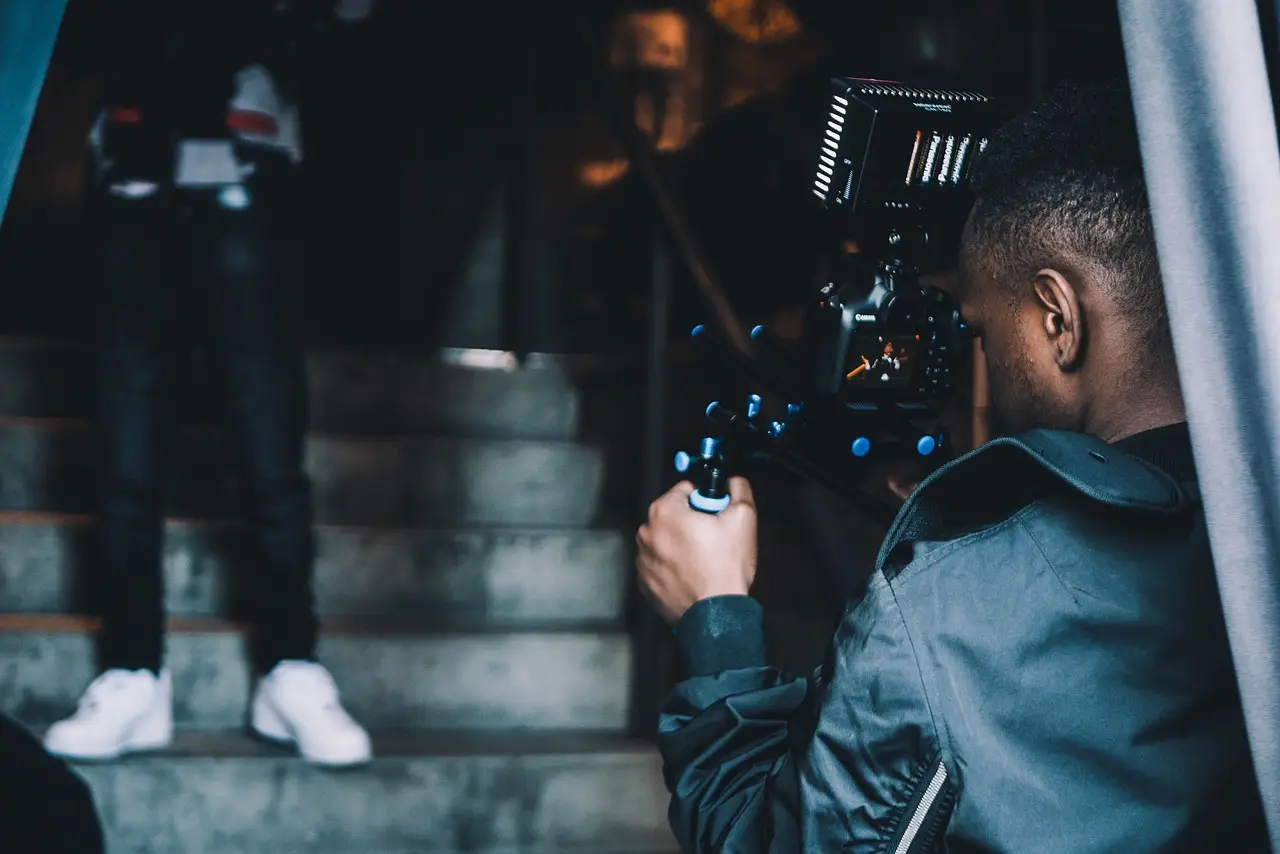
A 197-million-view behind-the-scenes clip has become the strongest evidence that proof of human craft now outperforms the advertising it documents. The video, posted on Apple's secondary Instagram account @helloapple to support its 43-second claymation spot "The Mighty Mac mini," drew 197 million views against 32 million for the spot on YouTube. It is the most-watched video ever posted by the account and one of Apple's most popular social posts of all time.
The numbers explain a broader strategic shift. As audiences increasingly accuse brands of deploying AI-generated imagery, marketers at Levi's, Prada, Dior, E.l.f. and Loewe have begun treating behind-the-scenes (BTS) films as core campaign assets rather than industry afterthoughts—in some cases arguably more important than the campaigns themselves.
What changed in the BTS strategy?
Levi's stop-motion holiday ad, "Let's Get Fuzzy," took 2,000 hours to create. Its production partner, the studio Blinkink, spent four hours on every second of animation. Levi's global CMO Kenny Mitchell said the BTS film was "central" to the campaign strategy.
"You almost want to make sure that you can show some of the verification and receipts for the hard work, effort, and craft that you're putting in," Mitchell said. "When we first posted our campaign on TikTok, one of the comments was like, 'AI slop.' And literally the next comment underneath it was, 'No, this is stop motion.'"
Apple, Anthropologie, Prada, Dior, E.l.f. and Loewe have all recently debuted claymation, stop-motion or hand-drawn ads with accompanying BTS videos. Three factors distinguish this wave from the BTS boom of roughly a decade ago, when such footage served mainly as awards-submission material.
- Craft-forward brands with devoted fan bases are producing it.
- The highlighted mediums—stop-motion, hand-drawn animation—play well on film.
- Brands now publish BTS content on their main social feeds, not obscure case-study pages.
Greg Lotus, global head of production at VML, recalled the earlier era: "Nobody really cares about the fact that you had a couple days on a set and shot this toothpaste commercial." Saulo Rocha, executive creative director at Apple's bespoke agency TBWA\Media Arts Lab, added that BTS was once "more of an internal thing" that rarely reached YouTube.
Why are audiences rewarding handmade ads?
Apple has a long record here: the 2019 AirPods spot "Bounce" and the 2023 holiday film "Fuzzy Feelings" both shipped with BTS videos. This year, the public response shifted. Under the Mac mini BTS clip, commenters wrote "Thank you for hiring human animators to make this" and "In a world full of ai commercials, thank you for this apple."
Greg Greenberg, another executive creative director at MAL, directed Apple's 2025 holiday spot "A Critter Carol," built on puppets in a handmade forest. The film became Apple's most-viewed holiday spot ever, with 141 million social views. "Even if it's not AI, but for some reason somebody confuses it for that, the internet will have its way with you," Greenberg said.
The gratitude is measurable elsewhere:
- Prada's BTS video for "Drawing Prada," hand-drawn by former Disney animator John Pomeroy, has 2.8 million views and more than 2,300 comments.
- Under Levi's BTS, one user wrote, "Yes!!!! Real art!!! I respect this so much."
- An E.l.f. follower wrote, "No slop = will shop!"
E.l.f. CMO Oshiya Savur said the brand used no generative AI or CGI in its spot: "We're human first, human last at E.l.f. AI can be a useful tool, but the ideas and the taste come from people. For this story, we wanted you to feel the care in every frame, because the care is part of the story." The spot features actor Alan Cumming narrating over three stop-motion characters.
What happened to Dior?
The strategy cuts both ways. Dior's 7-minute animated holiday ad, "Christian Dior's Night in Color," directed by French animator Sylvain Chomet, shows several signs of AI-generated imagery, according to commenters on the brand's Instagram: warped lettering, a lazy eye, and a misplaced finger bone. In the BTS video, Chomet said, "Technically, we work just as they did in the 1940s. It's exactly the same technique."
The film's creators deny using AI-generated imagery, saying they relied on an "automated interpolation" system to generate the in-between frames. LVMH's press department did not respond to a request for comment. Thousands of comments across the campaign videos demand Dior hire real artists. "People don't like to be fooled," Lotus said.
Is the craft resurgence sustainable?
Industry creatives agree that as AI oversaturation increases, public demand for human creativity rises with it. Greenberg believes stop-motion advertising is nearing a peak, but not the end of the craft resurgence. "There's always an extreme to every extreme," he said. "Stuff always evens out."
MAL's Rocha predicts audiences will grow more critical: "The more you see of something, the more you become empowered to critique it. Some brands will tap into it, but for the wrong reasons. That's going to be evident, because now we'll feel smart enough to tell the difference."
Mitchell framed the commercial logic directly: "There's a lot of things that AI can do, but we believe strongly that this human creativity and the craft connected to it is something that drives a tremendous amount of value for companies. It's what our fans want to see."
Lotus offered the longer view: "The future may be full of perfectly generated AI content, but I suspect people will continue to gravitate toward work that bears the fingerprints of the makers. The work is great not 'despite the imperfections,' but because of them."
via fastcompany.com/rss (Source)
More from Amara Osei
Show full bio
Market editor covering people, launches and day-to-day practice in corporate strategy and chief-executive leadership at CEO Frontier.
449 articles
Adjacent sheets
- AI Is About to Make the Attention Economy's Worst Problem Worse
- Ex-Meta Researchers Pay Gig Workers to Train Robots With Body Cameras
- Disney Plans 500 Daily Vertical Clips and a Free Disney+ Tier
- TikTok Shop’s US team shifts toward leaders with China experience
- Spotify’s Ringer drops ChatGPT deal after fan backlash