Field report ·
Boardroom MacroFiled from the territory
ASX Set to Jump After Nvidia Reinstatement Fires Wall Street's Best Day
Nvidia's reinstatement of Jensen Huang sent the Nasdaq up 6.51% and S&P 500 up 4.73% — the best day since April 2025. ASX futures point 1.5% higher ahead of Wednesday's October CPI print.
- Surveyed
- November 23, 2026
- Reading
- 5 min read
- Correspondent
- Priya Raman
Field notes
- S&P 500 rose 4.73% and Nasdaq 6.51% on Monday 23 November — best day for both since April 2025.
- Nvidia jumped 31.5% after the board reinstated Jensen Huang as CEO, its biggest one-day gain since May 2003.
- ASX futures pointed 1.3-1.5% higher before Tuesday's open; the ASX 200 closed Monday at 8,570.6 after an eighth straight loss.
- ABS October CPI lands Wednesday 25 November at 11:30am AEDT; market expects annual inflation to jump from 4.3% to 4.8%.
- VIX fell 25.83% to 26.62 from 35.89, still above early-November levels near 17-19.
Australian investors walked into a 1.3-1.5% gap higher this morning after Nvidia's board reversed itself and reinstated Jensen Huang as chief executive, lighting the fuse under Wall Street's strongest session since April 2025. The S&P/ASX 200 closed Monday at 8,570.6, down 0.25% on an eighth straight losing day, according to Motley Fool Australia and ABC. SPI futures at 7:38am AEDT pointed to a 127-point, or 1.5%, higher open, after the AFR reported a 115-point, 1.3%, gain near 7:00am AEDT, paring an earlier move above 1.5%.
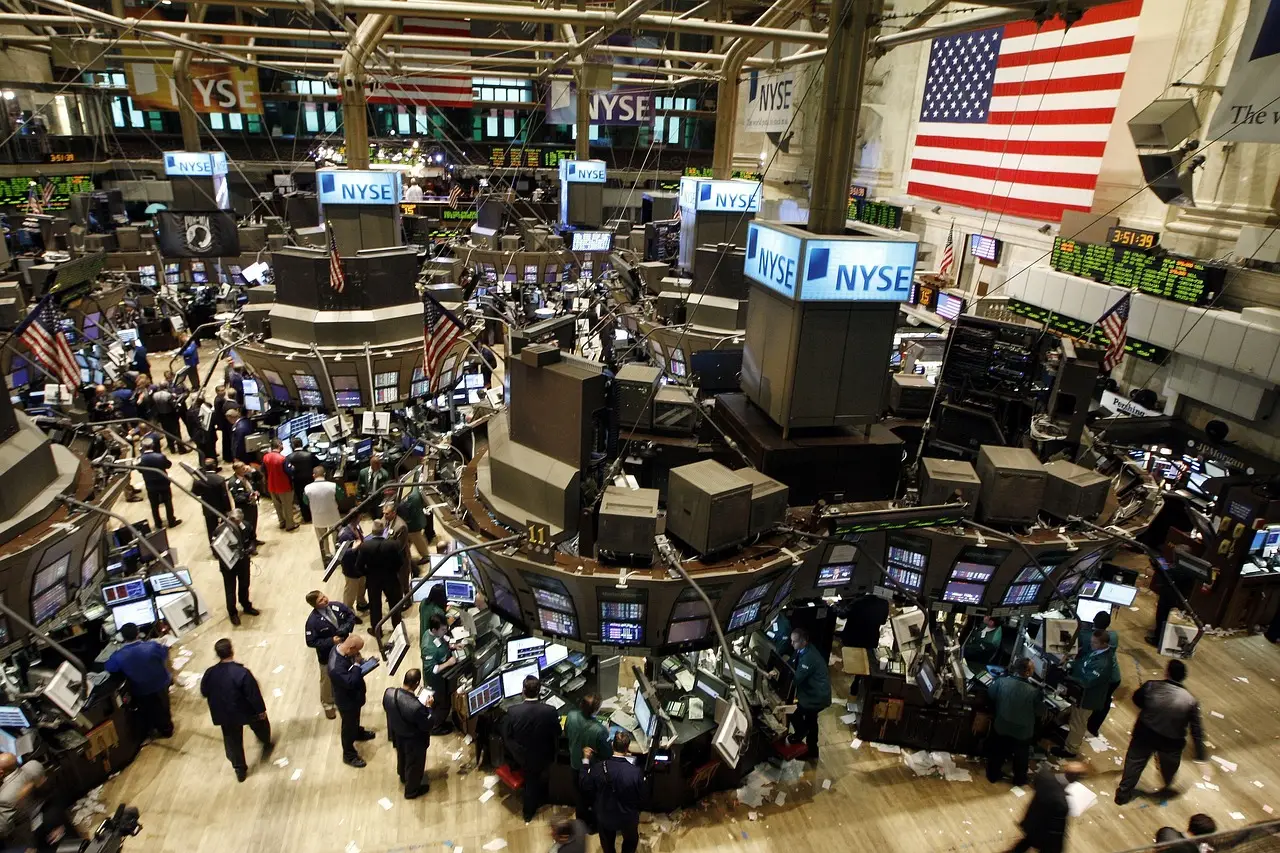
The rally was real, and it was enormous. On Monday 23 November (US time), the S&P 500 jumped 4.73%, or 326.78 points, to 7,237.17, and the Nasdaq Composite surged 6.51%, or 1,471.83 points, to 24,089.56 — the biggest daily percentage gains for both since the April 2025 surge that followed President Trump's pause of his "Liberation Day" tariff package, per Reuters. The Dow Jones added 1,447.98 points, or 3.01%, to 49,595.31. The S&P 500's rise broke a run of seven straight down days, Yahoo Finance noted.
What caused it?
One corporate headline. Nvidia announced Huang's resignation on 12 November; on Monday the board reinstated him as president, chief executive and board director, effective immediately. Reuters reported Nvidia shares finished 31.5% higher — the stock's biggest one-day gain since May 2003 — while the S&P 500 information technology sector rose 9% and the Philadelphia semiconductor index gained 14%, its best day since April 2025.
The starting point mattered too. CNBC reported that by Friday all three major US averages sat in correction territory, down 10% or more from recent highs, and the Nasdaq-100 had been flirting with a bear market, off nearly 20% from its high. Monday's rebound came from deeply oversold conditions. The Cboe Volatility Index (the VIX measures expected S&P 500 swings over 30 days) collapsed 25.83%, from 35.89 to 26.62, after trading as high as 40.03 on Friday. That's still well above early-November levels of roughly 17-19, so hedging demand hasn't fully normalised.
How will sectors split on the ASX?
A strong index open can hide very different stories underneath. The drivers diverge sharply:
- Tech and data centres: Motley Fool flagged NextDC and Megaport after the AI rebound on Wall Street.
- Miners: Tapas Strickland, chief market strategist for Moomoo Australia and New Zealand, told ABC: "Local miners have a strong tailwind after gold rose 3.4 per cent, silver gained nearly 4.5 per cent and copper climbed 2.3 per cent." Spot gold hit about US$3,635 an ounce, with futures at US$3,638.9 per CNBC — rebounding after forced selling hit even safe havens last week.
- Energy: Brent crude fell 3.8% to US$89.905 a barrel and WTI dropped 4.2% to US$79.92, per ABC and Bloomberg. Beach Energy and Santos could struggle.
What about the Australian dollar?
Barely moved, and the mechanism explains why. ABC's snapshot had the AUD up just 0.1% at 66.4 US cents. Westpac's morning report said the US dollar strengthened alongside the rally in dollar-denominated AI stocks, while the Aussie "proved relatively resilient, holding flat against the greenback." Markets also rebuilt expectations for a December US Federal Reserve rate hike — a firmer greenback plus higher rate-hike odds blunts the usual AUD pop on big Wall Street days. The Australian 10-year yield stood at 4.91% against the US 10-year at 4.95%, per ABC.
Why does Wednesday's CPI matter so much?
The Australian Bureau of Statistics publishes October CPI on Wednesday 25 November 2026 at 11:30am AEDT. The last reading showed annual inflation of 4.3% in September, up from 4.0% in August, with a 0.8% monthly rise and trimmed mean inflation (a measure stripping volatile items) of 3.6%.
ABC reported the market expects a 0.4% monthly rise for October, which would push the annual rate to 4.8%, driven mainly by fuel. There's also a base effect at work: the CPI was flat (0.0%) in October 2025, so when that flat month drops out of the annual calculation, the rate mechanically rises even if monthly price growth hasn't accelerated. Treasurer Jim Chalmers told parliament economists expect "very high headline inflation" from last month's fuel spike, and "underlying inflation to be flat or slightly higher too."
Inflation prints feed directly into Reserve Bank of Australia expectations, which move bond yields, the currency, and rate-sensitive sectors such as banks and property trusts — the very stocks dragging the ASX lower on Monday. The US calendar is busy as well: the PCE deflator (the Fed's preferred inflation measure) lands Wednesday, US markets close Thursday for Thanksgiving, and Friday wraps early at 1:00pm ET.
Is one big day a turning point?
Nobody knows, and honest strategists say so. Thomas Martin, senior portfolio manager at Globalt Investments, told Reuters: "you have one issue that is resolved — and it's a biggie — but you still have to see how the rest of things play out." Huang's return settled one specific worry, not the broader backdrop. Known catalysts ahead include Wednesday's twin inflation releases and Huang's scheduled Congressional testimony on 3 December, flagged by Strickland.
The lesson for positioning is simple. A large rebound after a sharp fall can be a relief rally, a bottom, or a move that fades within days. Big two-way swings are precisely when oversized, leveraged positions do their damage. Wednesday's numbers could reset the mood in either direction.
This article is general information, not financial advice.
via tradingview.com (Source)
More from Priya Raman
Show full bio
Senior reporter covering technology and product news in corporate strategy and chief-executive leadership at CEO Frontier.
598 articles
Adjacent sheets
- Nvidia Beats With $115.8bn Quarter as VIX Spikes Above 25
- Nvidia's $950bn Day Lifts S&P 500 4.7%, But 7,433 Decides Trend
- Dow Futures Jump 684 Points as Wall Street Rebounds From Correction
- S&P 500 Slides Toward Correction as AI Stocks Extend Sell-Off
- Huang’s return lifts stocks, leaving S&P 500 $5 trillion below peak