Field report E-93 / R1 · sheet /expansion
Expansion & MarketsFiled from the territory
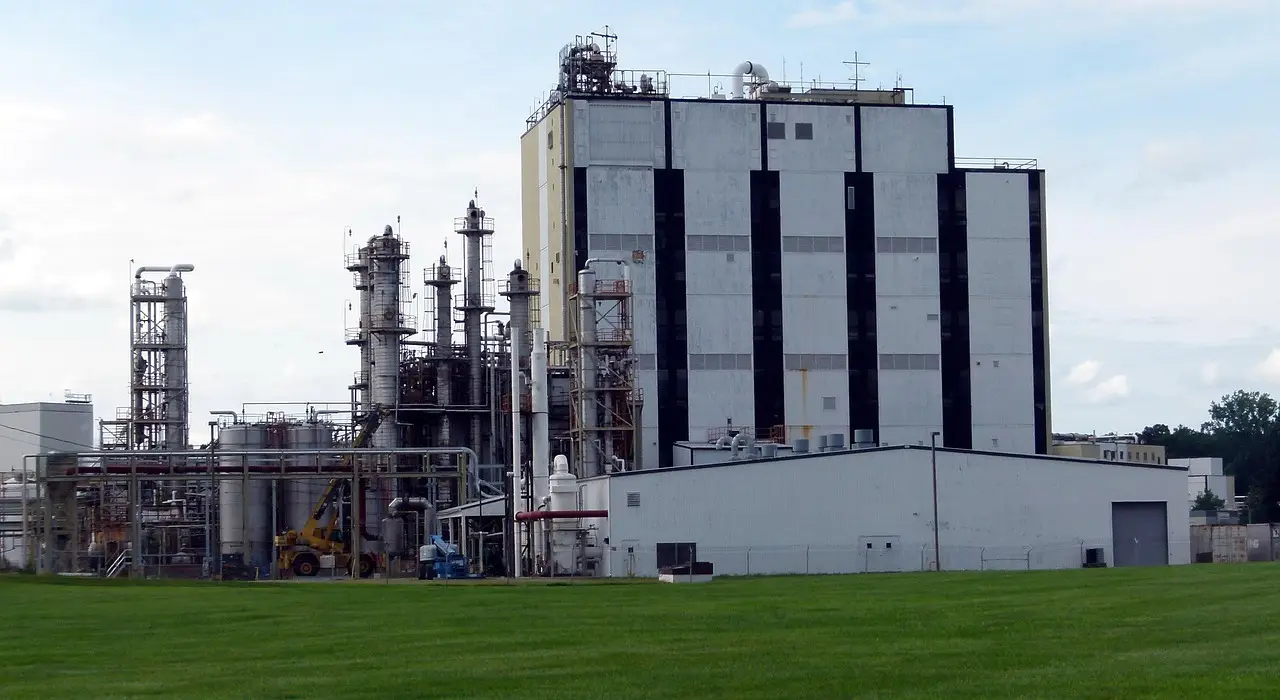
AstraZeneca Commits $2 Billion to Maryland Manufacturing Expansion
AstraZeneca will invest $2 billion in Maryland manufacturing, deepening its US production base — though timelines, jobs and product scope remain undisclosed.
- Grid
- E-93 / R1
- Surveyed
- October 16, 2026
- Reading
- 3 min read
- Correspondent
- Sophie Lindqvist
Field notes
- AstraZeneca announced a $2 billion investment in Maryland manufacturing expansion.
- The company has not disclosed a construction timeline or completion date.
- No job creation figures or product portfolio details accompanied the announcement.
- The move fits a broader pharmaceutical industry shift toward US-based production capacity.
AstraZeneca will invest $2 billion to expand its manufacturing operations in Maryland, one of the larger pharmaceutical production commitments announced in the United States this year. The figure is confirmed; almost everything else about the plan remains undisclosed.
The Anglo-Swedish pharmaceutical company has not yet published a full breakdown of the investment. What does this change for the company's US footprint? At minimum, it deepens AstraZeneca's reliance on Maryland as a production hub — though the company has not said how the $2 billion splits between new capacity, upgrades to existing lines, or supporting infrastructure.
What has actually been announced?
The headline number is $2 billion. The location is Maryland. Beyond that, the announcement leaves substantial gaps:
- No construction or completion timeline has been given.
- No headcount target — new jobs created or retained — appears in the announcement.
- No product portfolio has been tied to the expanded capacity.
- No breakdown between buildings, equipment, and technology spend is available.
AstraZeneca has a track record of large capital commitments to US manufacturing, and this announcement fits that pattern. But until the company specifies timelines and product scope, the $2 billion functions more as a statement of intent than a costed programme.
Why Maryland, and why now?
Pharmaceutical companies have been shifting production and supply chains toward domestic US capacity, driven by federal incentives and policy pressure to localise drugmaking. Maryland, with an existing life-sciences base, offers the workforce and infrastructure a project of this scale requires.
For AstraZeneca, the calculus appears straightforward: American demand for medicines is growing, and federal policy increasingly rewards manufacturers who build at home. Whether $2 billion secures that position depends on execution details the company has not released.
There is also a competitive dimension. Rival drugmakers have announced comparable domestic investments, and capital announcements of this size now function partly as signalling — to regulators, investors, and policymakers. The commitment is real; its strategic payoff is not yet measurable.
What does this change for the region and the sector?
For Maryland, the immediate value is reputational: a $2 billion commitment from a top-ten global drugmaker reinforces the state's pitch as a biomanufacturing destination. Local economic effects — construction spending, supplier contracts, hiring — will follow only as the project breaks ground, and no dates have been set.
For the wider pharmaceutical sector, the announcement adds to a cumulative pattern of onshoring. Each commitment of this scale increases pressure on competitors to match it, and on suppliers to position themselves for the resulting demand.
The open questions
n Skeptical readers should hold three questions open:
- When will construction begin, and over how many years will the $2 billion be spent?
- How many jobs does the company project, directly and through suppliers?
- Which therapies or product classes will the expanded capacity serve?
None of these has a public answer yet. AstraZeneca has committed the money; the substance of that commitment — what gets built, when, and for whom — will determine whether this is a landmark investment or a headline figure with slow delivery behind it.
The company can be expected to release further detail in coming months. Until then, the $2 billion stands as a promise with a promising number attached, and the burden of proof sits with execution.
via Google News: market entry expansion (Source)
More from Sophie Lindqvist
Show full bio
Correspondent covering money, funding and market shifts around corporate strategy and chief-executive leadership at CEO Frontier.
86 articles
Adjacent sheets
- Merck Eyes Expansion of Montgomery County Campus as Part of $2.9B Investment
- Takeda targets $1.3 billion in fresh cost-savings drive
- Takeda Begins US Layoffs Under $1.3B Restructuring
- GSK Commits $30 Billion to US R&D and Factories as Trump Lands in UK
- AstraZeneca weighs cancer vaccines as Phase 3 data emerge