Field report ·
Expansion & MarketsFiled from the territory
Ashley Furniture Opens First Nigerian Showroom in Lagos
Ashley Furniture opened its first Nigerian showroom in Lagos via a partnership with Vento Furniture, as Vice-President Shettima framed the entry as proof of reform — while other multinationals exit.
- Surveyed
- November 23, 2026
- Reading
- 3 min read
- Correspondent
- Sophie Lindqvist
Field notes
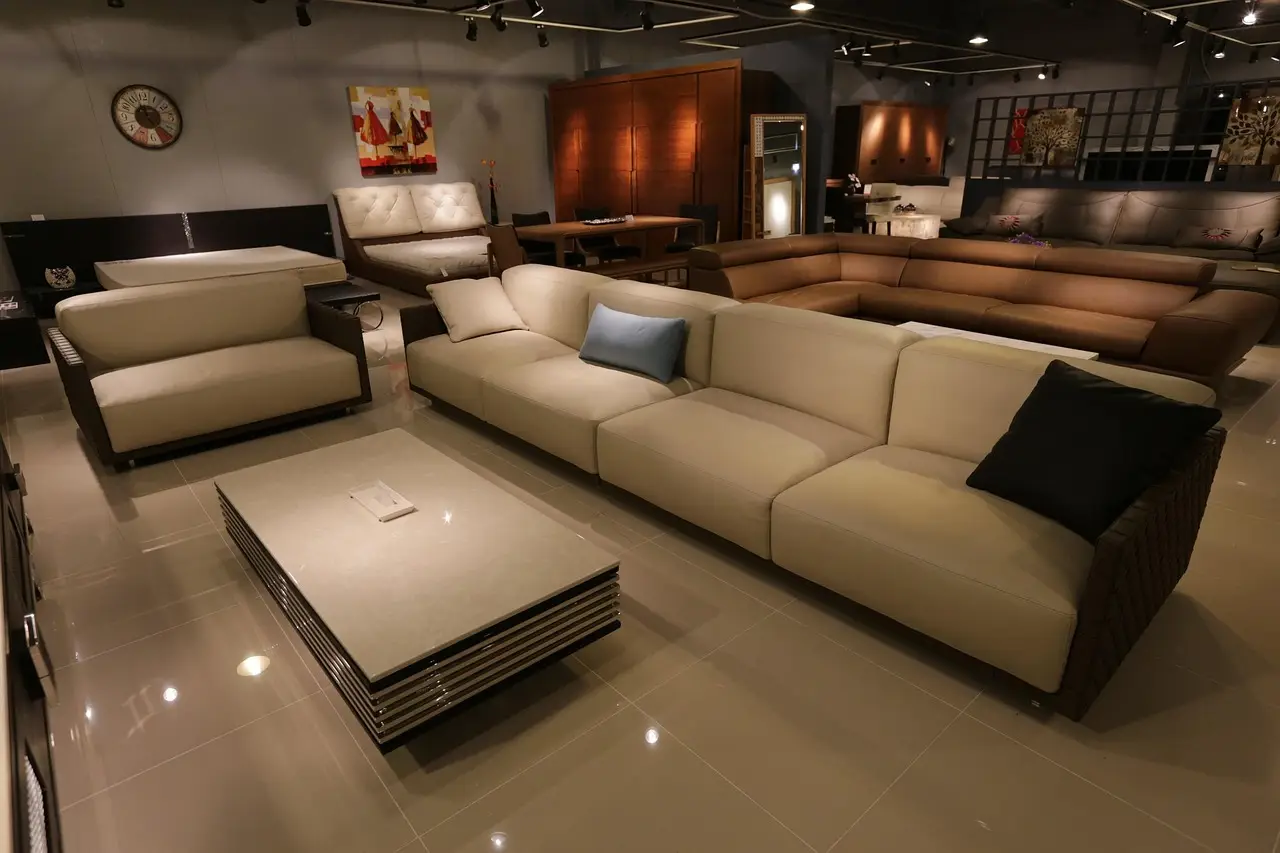
- Ashley Furniture opened its first Nigerian showroom on the Lekki-Epe Expressway in Lagos on November 20, 2026.
- The entry runs through a partnership with Vento Furniture, signed October 23, 2025 at the High Point Market in North Carolina.
- Ashley, founded in 1945, describes itself as the world's largest home furnishings manufacturer.
- Several multinationals including GSK, P&G, Equinor, Sanofi and Uber have exited or scaled back Nigerian operations since 2023.
- No investment amount, store count or local manufacturing commitments were disclosed.
Ashley Furniture, the US manufacturer that calls itself the world's largest home furnishings maker, has opened its first Nigerian showroom in Lagos, staking a retail position in a market where several multinationals are heading the other way. Vice-President Kashim Shettima inaugurated the flagship outlet along the Lekki-Epe Expressway on Friday, November 20, 2026.
The company enters Nigeria through a strategic partnership with Vento Furniture, a Nigerian furniture retailer that already operates showrooms in Lagos, Abuja and Port Harcourt. The deal was formally announced in November 2025, following a signing ceremony on October 23, 2025, at the High Point Market in North Carolina. Ashley says the agreement will expand its presence in West Africa and put its products in front of Nigerian consumers. What the announcement does not say is how large the investment is, how many stores are planned, or what the partnership's revenue split looks like.
Founded in 1945, Ashley operates manufacturing and distribution facilities and retail outlets in several countries, with existing operations in other African markets. Nigeria now becomes part of an international retail network the company has said it wants to strengthen. No sales targets, local manufacturing commitments or employment figures were disclosed at the opening.
What does the opening change for Nigeria's investment climate?
Rhetorically, quite a lot. Shettima framed the arrival as evidence that President Bola Tinubu's economic reforms are working. "Every investor who commits capital to Nigeria has made a judgement about our future. Ashley Furniture's decision speaks to the reforms set in motion by His Excellency, President Bola Ahmed Tinubu," he said.
He argued that Nigeria's population gives it scale, but that policy must convert that scale into opportunity. "We did not get here by chance. For too long, Nigeria has performed below its potential. This administration came prepared to change that story," the vice-president said. He also urged investors to deepen their commitment through local production, domestic supplier development and skills training for young Nigerians. "We earn more from an investment when our people acquire the knowledge to build what they have learnt to buy," he added.
Whether one showroom opening can carry that argument is another matter. The context cuts against the official narrative.
Why does the timing raise eyebrows?
Shettima's remarks come against a backdrop of foreign companies withdrawing from Nigeria, selling local assets or shrinking direct operations since Tinubu took office. A recent analysis by the International Centre for Investigative Reporting documented several departures:
- Uber exited Nigeria in September.
- Equinor announced the sale of its Nigerian business in 2024, after more than 30 years in the country.
- GlaxoSmithKline said in August 2023 it would cease direct operations after 51 years and move to a third-party distribution model.
- Procter & Gamble, maker of Pampers and Ariel, announced in December 2023 it would discontinue local operations after more than three decades and switch to an import-only model.
- Sanofi, the French pharmaceutical company, transferred its commercial operations to a third-party distributor.
The pattern is consistent: multinationals with heavy local manufacturing footprints have retreated as economic conditions tightened, while asset-light market entries continue. Ashley's structure fits the second category. Its Nigerian beachhead runs through a local partner with existing retail infrastructure, which limits the capital the American company must commit directly.
The government will present the Lagos showroom as a confidence signal; the exit list presents a counterweight. For now, the claim rests on one store, one partner and an undisclosed sum.
via icirnigeria.org (Source)
More from Sophie Lindqvist
Show full bio
Correspondent covering money, funding and market shifts around corporate strategy and chief-executive leadership at CEO Frontier.
585 articles