Field report N-55 / Q2 · sheet /strategy
Corporate StrategyFiled from the territory
Agri Spray to Build Fully American Agricultural Drones Within Five Years
Missouri's Agri Spray will drop Chinese hardware and build fully American spray drones in five years, as FCC and defence rules squeeze foreign UAVs from the U.S. market.
- Grid
- N-55 / Q2
- Surveyed
- November 13, 2026
- Reading
- 4 min read
- Correspondent
- Sophie Lindqvist
Field notes
- Agri Spray plans to build fully U.S.-made agricultural drones within five years
- The company has produced about 1,000 spray drones per year for the past three years
- It employs about 65 people and plans to hire 25-30 more over two years
- In July the FCC proposed restricting 'military-grade' foreign drones, including spray models
- Software production starts as early as this month; U.S. motors arrive by year four
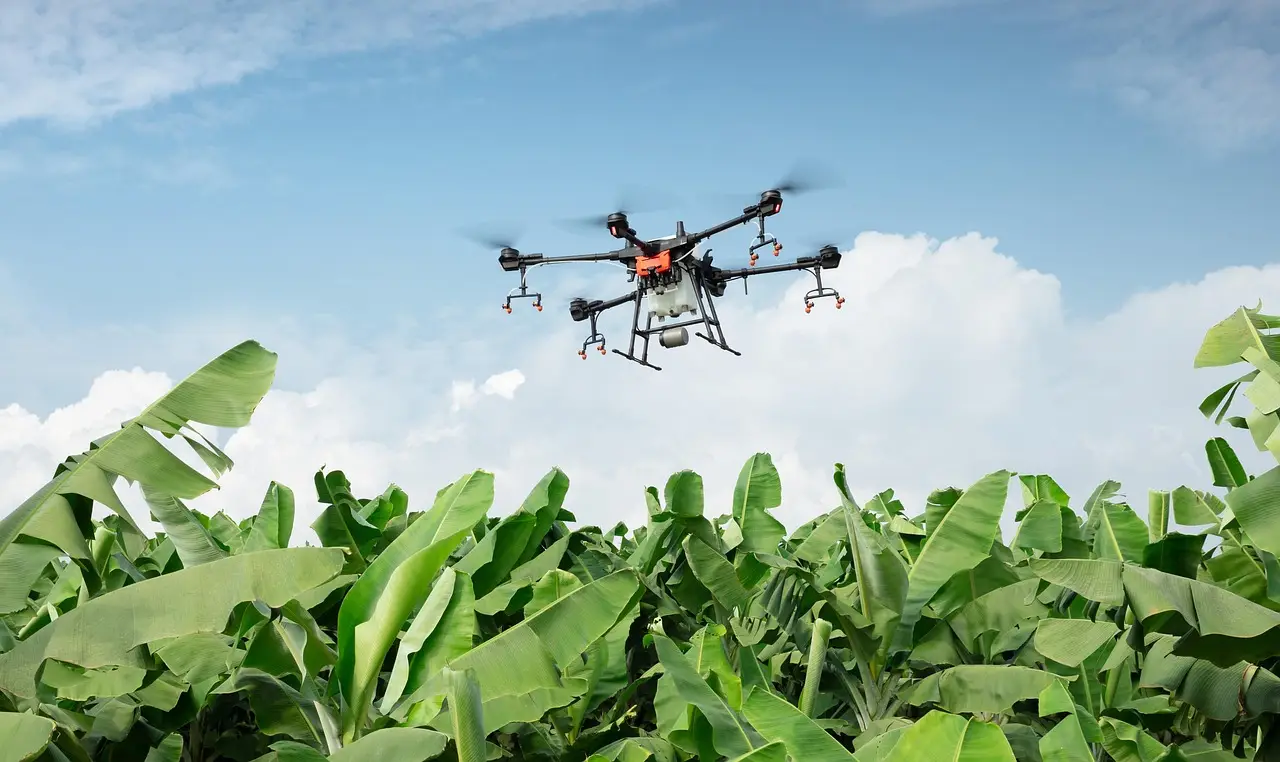
Agri Spray, a Missouri drone distributor, has committed to replacing its Chinese-made product line with fully U.S.-manufactured agricultural spray drones within five years. The decision is not a matter of ambition but of regulatory survival: federal restrictions on foreign-built UAVs (uncrewed aerial vehicles) are closing the market the company currently depends on.
Founder and CEO Taylor Moreland said the move follows restrictions imposed by the Federal Communications Commission and the U.S. Department of War, which he argues have created an urgent need for domestic production.
"We've been working on this for a little over a year, putting the plans together to get an understanding of what the needs are to begin producing some of this technology in the U.S.," Moreland said.
What do the rules actually cover?
The scope is broad. In July, the FCC proposed restricting foreign-produced drones and critical components that appear on its Covered List and meet a proposed definition of "military-grade." That definition includes drones capable of dispensing "economic poison" — a category that could capture agricultural spray drones used to spread insecticide and defoliants.
Moreland identifies two motives behind the crackdown: data security and supply chain security. "The U.S. government wants to make sure that the drones flying over U.S. skies are controlled — software-wise, data-wise, backend-wise — by U.S. companies," he said. "And secondly, they want to make sure that the supply chain cannot be cut off by one foreign adversary or another."
That second concern cuts both ways. The U.S. currently lacks the industrial capacity to supply the two most critical components — motors and batteries — at the scale the agricultural sector demands. Moreland is blunt about the constraint.
"Could we build a 100 percent US-made spray-drone: software, hardware, everything? Yes, we could. But could we build 5,000 of them by the end of this year or next year? No," he said.
How does the five-year plan unfold?
The sequence is incremental, and each stage carries execution risk:
-
Now: in-house production of software and firmware begins as early as this month, even while most hardware still comes from China. The company will use the DoW and FCC's conditional approval program to keep foreign supply chains running during the transition.
-
Months ahead: assembly and quality control start at the Boonville, Missouri headquarters, where part of the main warehouse has been converted into an assembly line. Foreign-sourced flight controllers and printed circuit boards (PCBs) will continue to come from allied countries such as Taiwan.
-
Years 2-3: the share of U.S.-made components rises, starting with simpler parts — injection-molded pieces, aluminum frame tubes, fasteners. PCBs are the hardest domestic substitution.
-
Year 4: U.S.-sourced motors enter the product line; U.S.-made batteries, prototyped from next year, go into most products.
-
Year 5: the company expects to meet federal requirements for U.S. production and componentry in full.
"We are starting to prototype those now. We know that building that steady supply is going to take a bit of time, so it's not going to be an instant switch," Moreland said of the motors.
What does this change for the company?
Founded in 2020 and entirely owned by Moreland, Agri Spray has produced roughly 1,000 spray drones a year for the past three years and employs about 65 people. The plan calls for hiring 25 to 30 more staff over the next two years and, notably, raising outside capital for the first time.
"We are right now beginning the first steps into seeking investment. We're being pretty strategic about who we work with," Moreland said.
The company's economics rest on more than aircraft sales. Its drones fly ten-plus hours a day, all summer, at high payloads near power lines and trees — conditions that generate constant demand for parts, repairs and field infrastructure such as generators, trailers and plumbing systems. Moreland says the segment demands fast turnaround: operators race "against the clock in terms of weather and plant growth and disease growth."
What remains unsaid is the cost of the transition and the price customers will pay for domestic components. The five-year timeline is a plan, not a delivered supply chain — and it depends on U.S. motor and battery makers scaling on schedule. Until they do, Agri Spray's compliance rests on conditional approvals that a future rule change could tighten further.
via dronelife.com (Source)
More from Sophie Lindqvist
Show full bio
Correspondent covering money, funding and market shifts around corporate strategy and chief-executive leadership at CEO Frontier.
271 articles